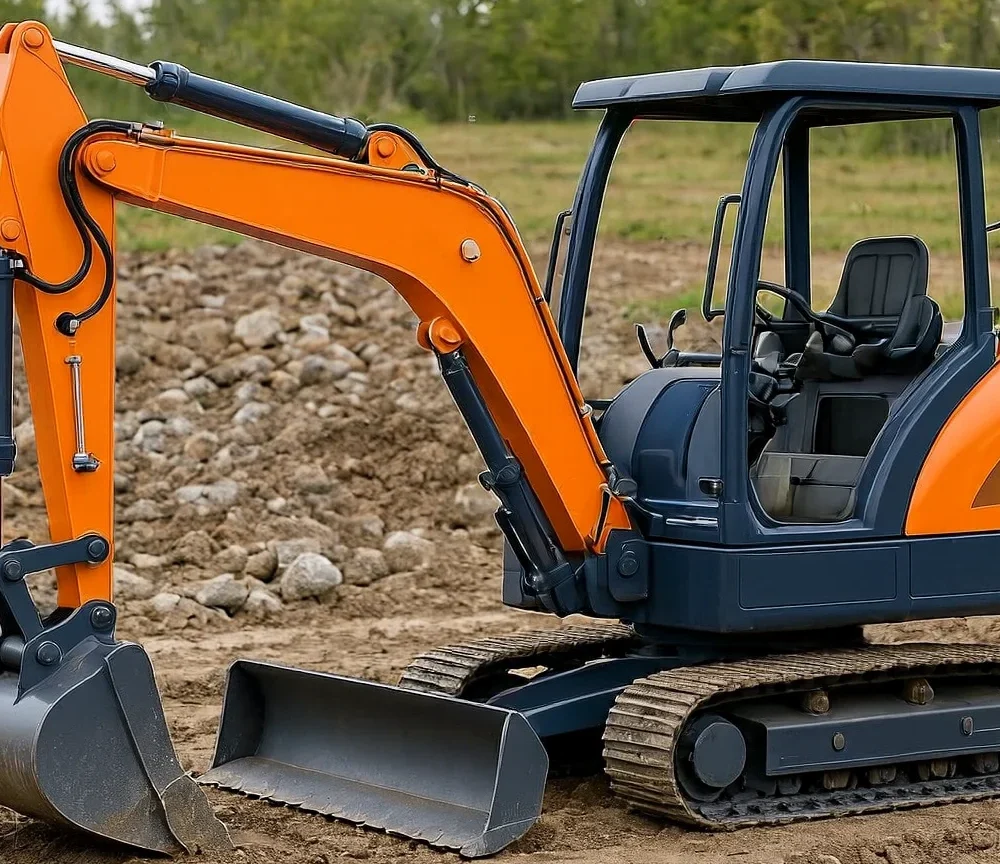
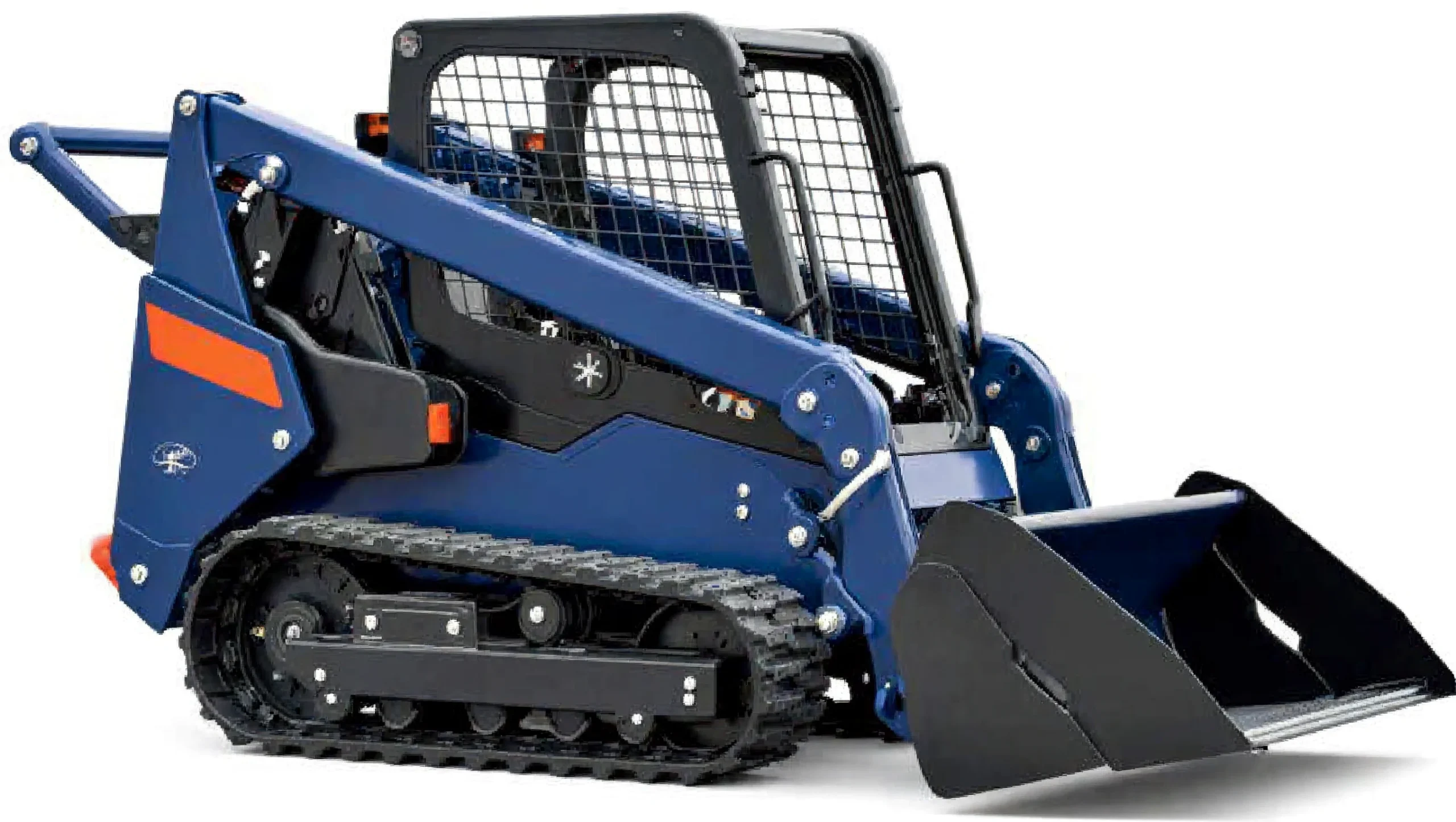
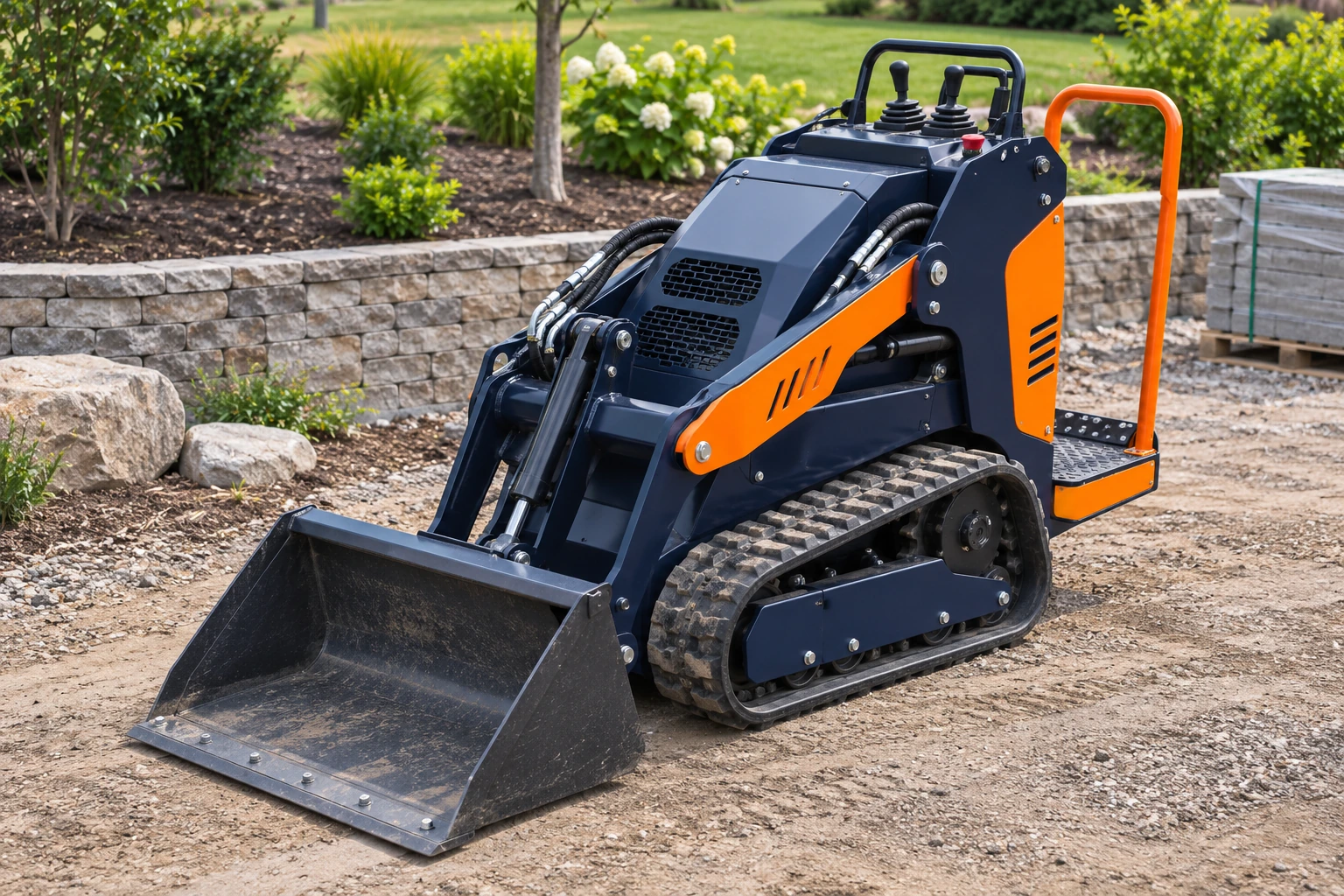
Mini Skid Steer Loader
SKU N42$13,992 per unit · FOB Qingdao
40% deposit, balance before shipment. Ocean freight, insurance, duty and destination charges excluded.
Volume discount
- Order over US$30,0003% offpay 97%
- Order over US$60,0005% offpay 95%
Discount eligibility depends on the products and order value. Final pricing is confirmed in your quotation.
- Power reference
- 18.5kW
- Working width / capacity
- 0.36m3
- Dimensions (reference)
- 2589x1106x1340mm
- Weight reference
- 333kg
Mini Skid Steer Loader (SKU N42) — skid steer and wheel loaders from LYVIK. Indicative unit price US$13,992, FOB Qingdao.
No online payment. Checkout creates a proforma-invoice order; we reply with bank details within one business day.
Overview
Mini Skid Steer Loader (SKU N42) belongs to our skid steer and wheel loaders range, supplied by LYVIK. Built for compact earthmoving, loading and material handling on sites where a full-size machine will not fit.
Price is US$13,992 per unit, FOB Qingdao. Orders are confirmed by proforma invoice: 40% deposit to start production, balance before shipment. Ocean freight, insurance, import duty and destination charges are excluded. Volume discount: 3% at US$30,000 and 5% at US$60,000 of eligible order value.
Reference values: power reference: 18.5kW; working width / capacity: 0.36m3; dimensions (reference): 2589x1106x1340mm; weight reference: 333kg.
Reference details and specifications on this page describe the base configuration. Final mount, hydraulics, width, engine, packing and certification are confirmed on the order-specific specification sheet before the proforma invoice is issued.
Product details
Product details
- Carrier / interface
- skid steer; quick attach
- Drive / hydraulics
- Kubota 18.5kW
- Packing reference
- pallet box with iron frame
Reference basis. Final configuration is confirmed on the order-specific specification sheet.
Product specifications
Product specifications
| Power reference | 18.5kW |
|---|---|
| Working width / capacity | 0.36m3 |
| Dimensions (reference) | 2589x1106x1340mm |
| Weight reference | 333kg |
| Warranty reference | 1 year |
Reference values for the base configuration. Mount, hydraulics, width, engine and packing are confirmed before the proforma invoice is issued.
Selection guide
Choosing, specifying and ordering Mini Skid Steer Loader
Overview
The LYVIK Mini Skid Steer Loader is a candidate machine for people comparing compact equipment for site preparation, material handling and other close-access work. The candidate SKU is N42. Business enquiries are intended worldwide; destination serviceability and the purchase method still need confirmation. Delivery responsibilities are described in Ordering and Delivery below.
Before making a decision, request the current specification sheet, a configuration and equipment list, documented load information, applicable manuals and an explanation of available parts and support. Compare the documents against your actual work rather than relying on an illustration or a general product category. The sections below provide a structured checklist for collecting those answers and comparing them with your site requirements.
Buyer Selection
For a dealer or fleet buyer, build a consistent comparison sheet before requesting model information. Record the work each unit is expected to support, the expected quantities, the destination and the accessories the customer will use. Use the same definitions when comparing documents from different suppliers: operating weight may be reported with different fluids or attachments, and a quoted width may describe either the machine or its bucket. Ask what is included in each measurement rather than treating figures with different conditions as directly comparable.
If the order involves several configurations, give each requested combination a separate reference. List the machine, the intended attachment and any requested documentation together, then ask the supplier to confirm which components are included and which are quoted separately. Where a distributor expects to supply several destinations, identify the different documentation and support needs before deciding whether one configuration can serve all of them.
For each proposed combination, record the supplier's model and document revision, the machine configuration, attachment identity, operating weight and the measurement conditions. Beside each value, note the source document and date. If a supplier gives an overall width without saying whether it includes the attachment, ask for that detail before comparing it with a gate measurement. Leave an empty cell where a value has not been documented; an estimate from a different configuration is not a substitute. For load information, describe the actual object, its weight and the position in which it will be carried or placed. Request the applicable chart and instructions for the exact machine and attachment, including the conditions attached to any rating. Compare the task against that documentation with the responsible site team. A capacity figure alone does not establish the permissible reach, lift height, ground condition or suitability of an attachment. Where the proposed work changes, ask whether the original documents and assessment remain applicable.
The first step in selection is to define your operational constraints. What is the narrowest clear width of the aisles or gates you need to navigate? What is the maximum ground pressure your site can tolerate? Next, consider the payload requirements. If your job involves moving heavy materials, you need to know the lift capacity. Ask the responsible team to review applicable load information and operating limits before assessing the proposed handling task. If the necessary data is not available, the suitability question remains open.
For excavation, request verified breakout force, attachment compatibility and the operating limits for the complete machine and attachment combination. Another key selection criterion is the operator interface. Ask the supplier to identify the proposed controls, operator position and applicable instructions for review by the responsible team.
Specifications to Verify
The following list details the specific technical parameters that are currently missing and must be verified before any operational planning or purchase decision. First, the overall dimensions must be verified. This includes the length, width, and height in operating and transport configurations, including any attachments. For any proposed running gear, request dimensions and operating guidance relevant to the intended surface. The ground clearance is also critical, especially if the machine will operate on uneven terrain. Without these dimensions, it is impossible to determine if the machine can fit through gates, into buildings, or under low-hanging obstacles.
The weight of the machine, both operating weight and maximum weight with attachments, must also be confirmed. This affects transport loading and site weight limits. If the machine is heavier than expected, it may exceed the load limits of trailers or floors, leading to logistical issues or safety hazards. Second, the power source and powertrain specifications must be verified. The engine power, measured in horsepower or kilowatts, is a distinct quantity from the hydraulic system output.
You cannot assume that a high-horsepower engine translates to high hydraulic force, or vice versa. If a fuel-powered configuration is proposed, ask for the applicable fuel information and the conditions behind any stated consumption values. The transmission type, whether hydrostatic or mechanical, will affect performance in different conditions. Third, confirm whether a hydraulic system is included and what information applies to attachment compatibility. The maximum hydraulic flow, measured in gallons per minute or liters per minute, and the maximum hydraulic pressure, measured in PSI or bar, are not provided.
If the proposed combination uses hydraulics, ask the supplier to confirm the relevant values and compatibility alongside all other applicable operating limits. When an attachment has its own hydraulic requirements, record the machine-side output and the tool-side input on separate lines. Ask whether a value is a maximum or a range and which operating conditions and configuration it describes. Keep flow, pressure, connection and control requirements distinct; matching one number does not establish that the whole combination is compatible. If documents use different units or refer to different measurement conditions, ask the suppliers to clarify the comparison in writing. Neither hydraulic equipment nor any particular interface is confirmed for N42.
Configurations
Ask which running gear is actually offered and request its documented suitability for your surface conditions. If tracked running gear is proposed, ask for the documented track material, width and service requirements. Ask which attachment interface, controls and connections are actually included in the proposed configuration. If hydraulic connections are offered, request their documented requirements and written compatibility for the exact machine and attachment combination.
For each offered configuration, verify the standing platform, controls, weather exposure and operator arrangements before comparing configurations. If options are offered, business buyers should compare their documented purpose and separately quoted cost with the operational needs of each destination. Ask how any proposed configuration changes affect the quoted price and documented weight. Buyers should clearly define their preferred configuration when requesting a quote. Lighting and visibility options are another configuration area.
Applications and Limitations
The following applications are planning scenarios. Suitability for N42 has not been established and requires verification of the proposed configuration and machine capabilities. Consider a contractor who needs to move palletized materials through a narrow entrance and place them beside a building. The purchasing brief can identify the pallet dimensions and weight, the entrance clearance, the space available to turn, and the height at which the material must be placed. It should also identify the proposed load-handling attachment and the surface on which the complete combination would travel. These are project requirements for discussion, not confirmed N42 capabilities.
A different job might involve moving loose material between a delivery point and a landscaped area. In that case, the buyer can describe the material, the available loading method, the route and the final placement area, then ask the supplier to identify the proposed working equipment and the conditions behind its documented information. If the same machine is expected to undertake both jobs, request a separate review for each attachment and load. The responsible site team must determine the work plan using the actual equipment instructions; the examples do not establish that either job is suitable for N42.
For example, material handling applications require a certain lift capacity and attachment compatibility. If the machine’s lift capacity is insufficient for the materials being moved, the application is not viable. Ask for the applicable load chart and operating instructions for the exact machine and attachment combination. Excavation suitability depends on verified machine limits and attachment compatibility. Describe the ground and intended excavation, and ask which documented machine and attachment limits apply to that work. Landscaping applications, such as grading and leveling, require precision and control.
Request the operating information for the proposed configuration and identify any questions about the required work. Do not infer a comparison with a larger loader without verified information for both machines.
Site Access and Transport
Site access is a critical factor in the deployment of the LYVIK Mini Skid Steer Loader, Candidate SKU N42. The machine’s documented dimensions are one part of assessing whether a proposed route has sufficient clearance. The buyer should measure their site access points and compare them with the machine’s final dimensions once available. If the documented machine width exceeds a gate, ask the responsible site team to review the available route and any alternative configuration.
Transport is another significant consideration. If the machine must travel to the site, ask the carrier to evaluate an appropriate transport arrangement. Request the documented transport weight of the machine and travelling accessories, then account for the trailer and any other load when checking the applicable vehicle and trailer ratings. The dimensions of the machine will also affect how it is loaded and secured on the trailer.
Alongside weight, the transport dimensions and securing requirements need review with the carrier and the responsible team. Ask the shipping provider to confirm the packaging and securing method appropriate for the agreed route. The packaging requirements and the weight of the packaged machine will affect shipping costs. Ask the selected freight provider for a route-specific transit estimate and the assumptions on which it is based. Until the configuration, packing and shipment details are confirmed, any logistics estimate should be treated as provisional.
Confirm the delivery contact, transport vehicle, unloading responsibility and receiving conditions in the quotation. Confirm the receiving and unloading requirements with the carrier and responsible site team, using the applicable equipment instructions and local requirements.
Maintenance and Parts
Ask for the maintenance requirements of the proposed N42 configuration before planning service and parts. Until the applicable instructions are available, a maintenance schedule and parts budget cannot be finalized for the proposed configuration. Use only the model-specific maintenance schedule once it is available. The availability of parts is a critical factor for B2B buyers, especially in global markets. If a part fails and is not available locally, downtime can be costly. The cost of parts is also unknown, so the buyer should budget for a parts reserve.
Request a model-specific parts list and ask which items, if any, can be supplied for the proposed destination. The compatibility of the N42’s parts with other brands is also a consideration. The buyer should confirm whether qualified technicians and model-specific support are available at their exact proposed destination. If destination support is limited, ask the supplier to identify the available service arrangements and any work that requires qualified personnel. Ask whether documented initial inspection or break-in requirements apply to the supplied configuration.
Warranty and service agreements are also part of the maintenance landscape. The buyer should understand what is covered, what is excluded, and the duration of the warranty. The terms for extending the warranty or purchasing a service plan are also unknown.
Ordering and Delivery
For a made-to-order business purchase, document the proposed order in stages. Begin with the quantity, model reference, requested configuration and destination. Then ask the supplier to identify the drawings, specification revision or equipment list that will form the basis of the quotation. Check whether accessories, packaging, documents and spare parts are included or priced separately. Keep revisions together so that changes to the requested equipment can be reviewed before either party treats the order as final. Agree how production milestones and the expected dispatch window will be communicated, and ask what information can be provided when the machine is ready for transport. The actual production schedule, inspection arrangements and any customer-specific requirements have not been confirmed for N42. If the buyer needs photographs, identification details, packaging information or a document pack before collection, list those requests in writing and obtain agreement before relying on them. These are questions for an order discussion, not promises of an available service or deadline.
For international orders, distinguish the machine price from freight, customs clearance, import duties, insurance and destination handling. The default B2B arrangement places freight, clearance and duties with the customer, subject to the final agreement. Ask the carrier what cargo details are needed, including verified packed dimensions and weight, and confirm who will arrange collection and unloading. Record any special delivery constraints, such as restricted access or limited receiving hours, so the parties can confirm whether the proposed route and receiving arrangements are practical. When comparing quotations, place each scope on the same worksheet: equipment and attachment lines, documentation, packing, production timing, currency and the named delivery term and location. Mark each line as included, separately priced or unanswered. For example, two proposals may appear to have the same machine price while only one identifies a bucket or export packing; treat that as a difference in scope until both suppliers clarify their offers. Confirm any insurance, destination charges and applicable taxes separately instead of assuming they are part of the equipment price.
Business enquiries are intended worldwide, subject to destination serviceability. The planned B2C market is North America; its available ordering channel and transaction method remain to be confirmed. Ask for a dated proposal identifying the configuration, destination, price and applicable purchase method.
Ask how the proposed schedule accounts for production, transport and, where applicable, customs clearance. The buyer should plan their project timeline accordingly, allowing for potential delays in shipping or customs. Where a named delivery term is proposed, ask the parties to state the responsibilities and any insurance arrangements in the written quotation. No Incoterm has been agreed for this preview; record the delivery term and named location explicitly in the quotation.
The insurance coverage for the machine during transit must also be addressed. The cancellation and refund policy is also a critical part of the ordering process. The buyer should review the cancellation terms carefully before placing an order.
FAQ
What is the price of the N42?
This model is listed at US$13,992 per unit, FOB Qingdao. Configuration, attachments, packing, freight, destination and duties are confirmed line by line in a written quotation.
Are there any verified specifications for the engine or hydraulics?
This preview does not contain verified numerical specifications for N42.
Can I use the N42 for heavy excavation?
Suitability for heavy excavation has not been established. Verify breakout force, attachment compatibility and operating limits before assessing suitability for the specific proposed task.
Who is responsible for customs clearance for international buyers?
By default, B2B buyers are responsible for arranging customs clearance and paying duties. Prices are quoted FOB Qingdao; international freight, insurance, destination customs, duty and tax are excluded. Payment: 40% deposit, balance before shipment.
Is there a warranty included?
Please wait for the official warranty documentation.
What attachments are compatible with the N42?
Do not assume standard compatibility.
How long is the delivery time?
Please request a timeline at the time of inquiry.
Is the machine suitable for indoor use?
Verify compliance with local indoor regulations.
Before requesting a Stand on skid steer quotation
Stand on skid steer selection should start with the work, access and proposed configuration. Record the material or vegetation, the working area, the route and the expected result before comparing Mini Skid Steer Loader. Ask for the model-specific specification, attachment list, transport dimensions, price validity, lead time and destination terms in writing. A category name, illustration or number in the listing name does not confirm suitability.
Used in these industries
Related products
-
SKU N38
1 Ton Mini Excavator
Earthmoving and material handling, Mini excavators
$4,770per unit · FOB Qingdao Add to cart -
SKU N54
Compact Crawler Jaw Crusher
Earthmoving and material handling, Stone crushing equipment
Price on requestquoted FOB Qingdao Read more -
SKU N36
Tracked Stone Crusher
Earthmoving and material handling, Stone crushing equipment
$34,768per unit · FOB Qingdao Add to cart -
SKU M14
Remote Chain Trencher
Earthmoving and material handling, Trenching, drilling and plowing equipment
$6,996per unit · FOB Qingdao Add to cart