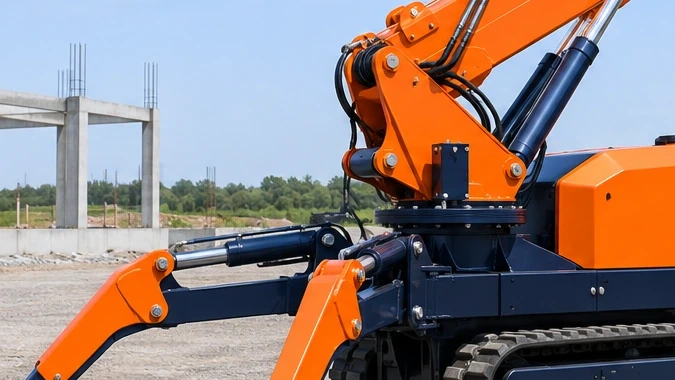
Compact Spider Crane
SKU N53$14,310 per unit · FOB Qingdao
40% deposit, balance before shipment. Ocean freight, insurance, duty and destination charges excluded.
Volume discount
- Order over US$30,0003% offpay 97%
- Order over US$60,0005% offpay 95%
Discount eligibility depends on the products and order value. Final pricing is confirmed in your quotation.
- Working width / capacity
- 3t
- Warranty reference
- 1 year
Compact Spider Crane (SKU N53) — lifting equipment from LYVIK. Indicative unit price US$14,310, FOB Qingdao.
No online payment. Checkout creates a proforma-invoice order; we reply with bank details within one business day.
Overview
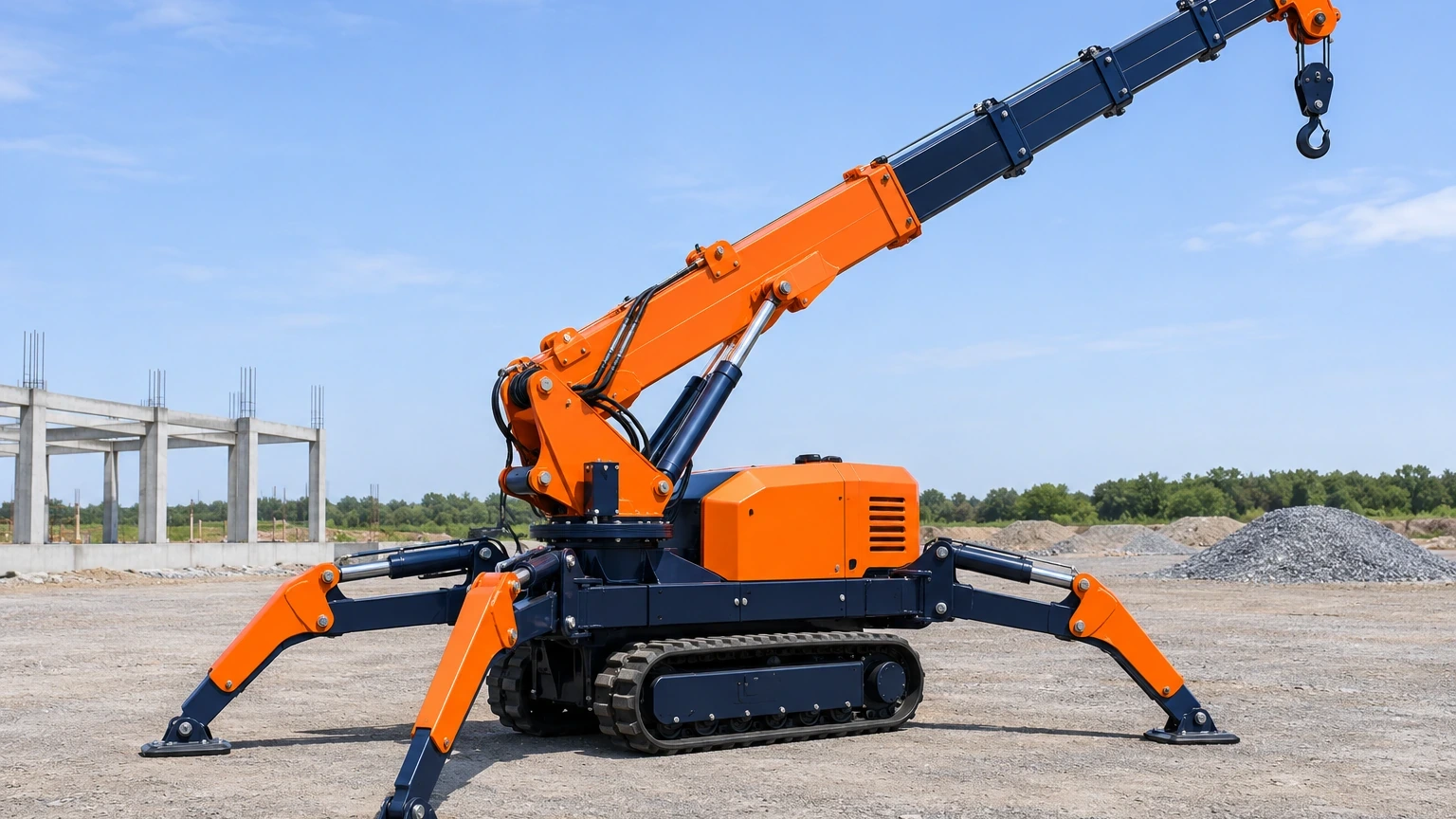
Compact Spider Crane (SKU N53) belongs to our lifting equipment range, supplied by LYVIK. Built for compact earthmoving, loading and material handling on sites where a full-size machine will not fit.
Price is US$14,310 per unit, FOB Qingdao. Orders are confirmed by proforma invoice: 40% deposit to start production, balance before shipment. Ocean freight, insurance, import duty and destination charges are excluded. Volume discount: 3% at US$30,000 and 5% at US$60,000 of eligible order value.
Reference values: working width / capacity: 3t; warranty reference: 1 year.
Reference details and specifications on this page describe the base configuration. Final mount, hydraulics, width, engine, packing and certification are confirmed on the order-specific specification sheet before the proforma invoice is issued.
Product details
Product details
- Carrier / interface
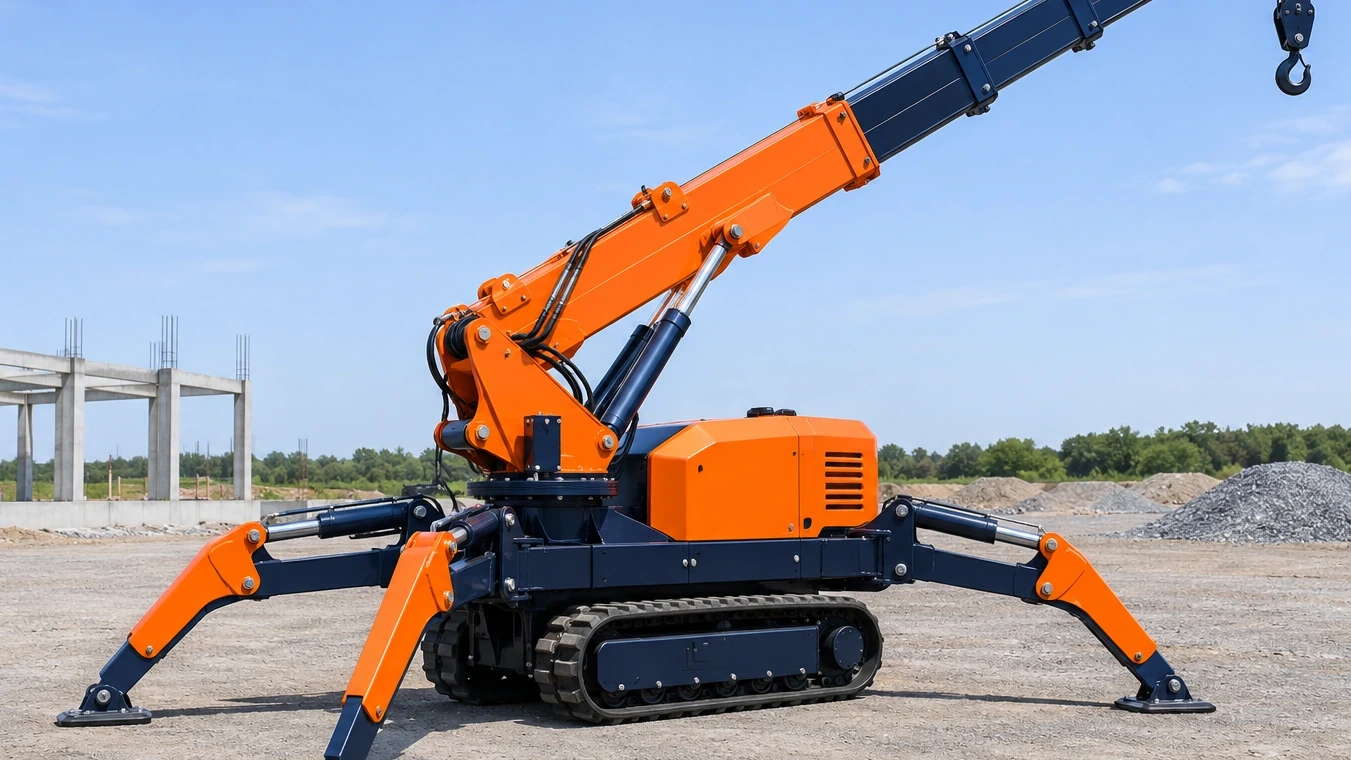
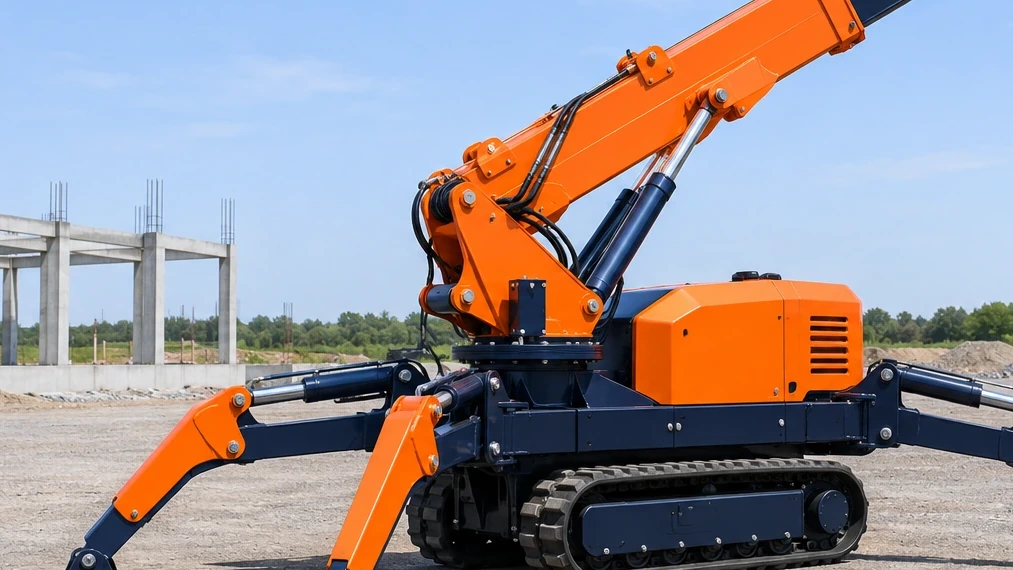
- self-propelled spider crawler
- Drive / hydraulics
- telescopic boom; 10.8m max lift; 2.7t dead weight
- Packing reference
- standard export wooden case
Reference basis. Final configuration is confirmed on the order-specific specification sheet.
Product specifications
Product specifications
| Working width / capacity | 3t |
|---|---|
| Warranty reference | 1 year |
Reference values for the base configuration. Mount, hydraulics, width, engine and packing are confirmed before the proforma invoice is issued.
Selection guide
Choosing, specifying and ordering Compact Spider Crane
Plan the work and the order
Describe the proposed lift
If a project has several placements, record them separately: a quotation based on one position should not be assumed to cover every placement.
Ask the supplier which measurements and documents it needs to identify a proposed machine and configuration. Record unanswered load or site information explicitly. This is an enquiry brief, not a lifting plan or an approval to operate.
N53 is a compact crane planning reference. The listing does not establish that any lift is feasible.
Request the exact load documents
Request the chart for the exact machine and configuration in the quotation. Ask the supplier to identify the equipment, setup, measurement definitions and other conditions shown on that document. Keep the revision together with the offer so the responsible team can review the correct source.
If the proposal changes the boom, support arrangement or other equipment, ask whether a different chart or document applies. Do not use a maximum headline figure, a competitor’s chart or an illustration as proof that a particular load can be lifted.
Document access and the site
Provide the route to the work area, doorways, turns, overhead obstructions and the available working space. Ask for transport dimensions as well as the documented space and site information needed for the proposed configuration in use.
Where support equipment or a particular setup is proposed, request the applicable instructions and identify the responsible parties for the site assessment. Ground and floor suitability, equipment setup and the lift itself must be determined by the competent project team using the actual documentation and local requirements.
Identify supplied lifting equipment
Ask for an itemised list of the machine, controls, lifting equipment and documentation included in the offer. If the project team requires separately supplied equipment, record who will source it and ask which identification and compatibility information is required.
Compare the same package scope across proposals. Product availability, training, documentation, destination support and any specific equipment or certification remain pending until confirmed for the order.
Compare the quoted package
Ask for the exact machine, configuration, supplied components, controls, documentation and any separately priced equipment in a dated quotation. Request separate lists and applicable document revisions for alternatives.
Provide the destination and project information prepared by the responsible team. Ask which documents, training and support are offered for that market, together with shipment details, price, production timing and transaction method.
How to compare Spider crane options
Spider crane is best evaluated as a work package, not as a catalogue label. Define the material or vegetation, the working area, the access route and the result the site team expects. For Compact Spider Crane (SKU N53), record the proposed machine, attachment interface, operating limits, transport dimensions and destination before comparing quotes. Model identity, configuration, lead time and availability are confirmed on the order-specific specification sheet. A useful Spider crane shortlist separates the task, site access, equipment package and commercial terms so each supplier answers the same question. The sections below show what to measure and what to request in writing, without treating a category name or an illustration as proof of suitability.
Define the work
Describe the material, vegetation or surface, the area covered and how often the Spider crane task repeats. Record the result expected after the pass.
Measure the site
Measure gates, aisles, overhead clearance, turning space, slopes and ground conditions. Add photographs and a route sketch, then have the site team confirm them.
Check the equipment package
Ask which machine, attachment and configuration are proposed. Confirm the interface, operating limits, documentation and transport dimensions for that exact package.
Compare the commercial offer
Put equipment, attachments, documentation, packing, freight, customs, price validity, lead time and support on one comparison sheet.
Site access, transport and setup
The access route is part of the Spider crane decision. Measure the narrowest gate, aisle or doorway, the overhead clearance, the turning space and the ground surface along the route. Record slopes, soft ground, kerbs, drainage and finished surfaces. If the route crosses a public area, occupied building or restricted site, add the working hours and permissions supplied by the responsible team.
The working area also needs a simple sketch. Mark where the material or vegetation is, where it must be placed, and where the operator can stand safely. For a machine, confirm the space needed to change attachments, refuel or recharge, clean down and store the unit between shifts. A route that works for an empty machine may fail once a trailer, attachment or load is added.
Before delivery, confirm the packed dimensions and weight, the unloading method and the receiving contact. Check that the destination can accept the transport vehicle and that the site can move the unit from the unloading point to the working area. Where these details are unknown, leave them blank in the enquiry rather than guessing.
Procurement and delivery planning
For B2B orders, LYVIK’s default position is production to order, with the customer arranging freight, customs clearance and import duties unless a written agreement says otherwise. The B2C market is planned for North America.
Keep the quotation comparable. Put the machine, attachments, documentation, packing, freight, customs, price validity, lead time and after-sales support on separate lines. Ask each supplier to identify the document revision and to mark any value that is an estimate. That makes it easier to see whether two proposals describe the same scope or only the same category.
Work planning and seasonality
Map the Spider crane work across the year rather than around a single busy week. Record peak periods, idle periods and the tasks that must be completed within a weather window. If the same unit will cover several seasons, list the attachments and changeover steps needed for each one. A proposal that looks efficient in one season may leave the crew short in another.
For each task, note the expected daily output, the number of operators and the support equipment needed. Include transport between sites, refuelling or charging, water or material supply, and cleanup. These inputs often determine whether a larger machine reduces total work or simply moves the bottleneck somewhere else.
Attachments, changeover and documentation
Ask how each attachment is mounted, what controls or hydraulic supply it needs, and how long a changeover takes with the crew available on site. Confirm that the attachment is documented for the proposed carrier. Do not assume that a shared mounting standard proves compatibility across models.
Request the operator manual, maintenance schedule, parts list and warranty statement for the exact configuration. Record who will receive the documents and who will train the operators. A complete handover package is part of the equipment offer, not an administrative extra.
How to prepare the enquiry
- Write the brief. Separate each task and site, and leave unknown values blank rather than guessing.
- Measure the route. Record the narrowest point and the space needed to work, turn and unload.
- List existing equipment. Note current machines, attachments, power sources and transport.
- Request documents. Ask for the model-specific specification, configuration list and manuals.
- Compare like with like. Use one sheet for equipment, attachments, freight and support.
- Confirm the destination. Confirm delivery point, unloading, duties, price validity and lead time.
Frequently asked questions
What should I compare when choosing Spider crane?
Compare the work package, access, proposed machine and configuration, documentation, transport and commercial terms. A model number alone does not establish suitability.
How much does a Spider crane cost?
This model is listed at US$14,310 per unit, FOB Qingdao. Configuration, attachments, packing, freight, destination and duties are confirmed line by line in a written quotation.
Can one machine cover several tasks?
Only if the attachment, interface and operating limits support each task. List the tasks separately and ask the supplier to confirm every combination.
What access information is needed?
Measure gates, aisles, overhead clearance, turning space, slopes and ground conditions. Confirm the route with the site team and note any restricted area.
What should the quotation include?
Ask for model and configuration, attachment list, manuals, packing, delivery point, freight basis, customs responsibility, price validity, lead time and warranty terms.
How should I compare two Spider crane quotations?
Use the same work brief, site measurements and configuration list for both. Compare the proposed equipment package, documentation, transport, price validity, lead time, duties and support line by line. Do not compare a bare machine price with a complete delivered package.
What if the site details are incomplete?
Leave unknown values blank and state that they still need confirmation. A supplier can respond with assumptions, but those assumptions should be written down and checked before an order. Do not treat an estimated dimension or capacity as verified.
Final checks before comparing Spider crane options
Before comparing Spider crane proposals, check that each one answers the same brief. Confirm the proposed model and configuration, the attachments included, the documented operating limits, the transport dimensions and the destination terms. Record who will operate and maintain the equipment, where it will be stored, and how consumables or spare parts will be supplied. Ask the supplier to mark any value that is still estimated or unverified. Keep the work packages and sites separate in the enquiry so a single answer does not hide a difference in scope. The final quotation should replace the planning assumptions on this page, not repeat them as confirmed facts.
Used in these industries
Related products
-
SKU N50
Compact Wheel Loader
Earthmoving and material handling, Skid steer and wheel loaders
$9,222per unit · FOB Qingdao Add to cart -
SKU M12
Remote Tracked Dumper
Earthmoving and material handling, Tracked carriers and material handlers
$3,206per unit · FOB Qingdao Add to cart -
SKU N41
3.5 Ton Compact Excavator
Earthmoving and material handling, Mini excavators
$15,900per unit · FOB Qingdao Add to cart -
SKU N57
Vibratory Plow
Earthmoving and material handling, Trenching, drilling and plowing equipment
$2,332per unit · FOB Qingdao Add to cart