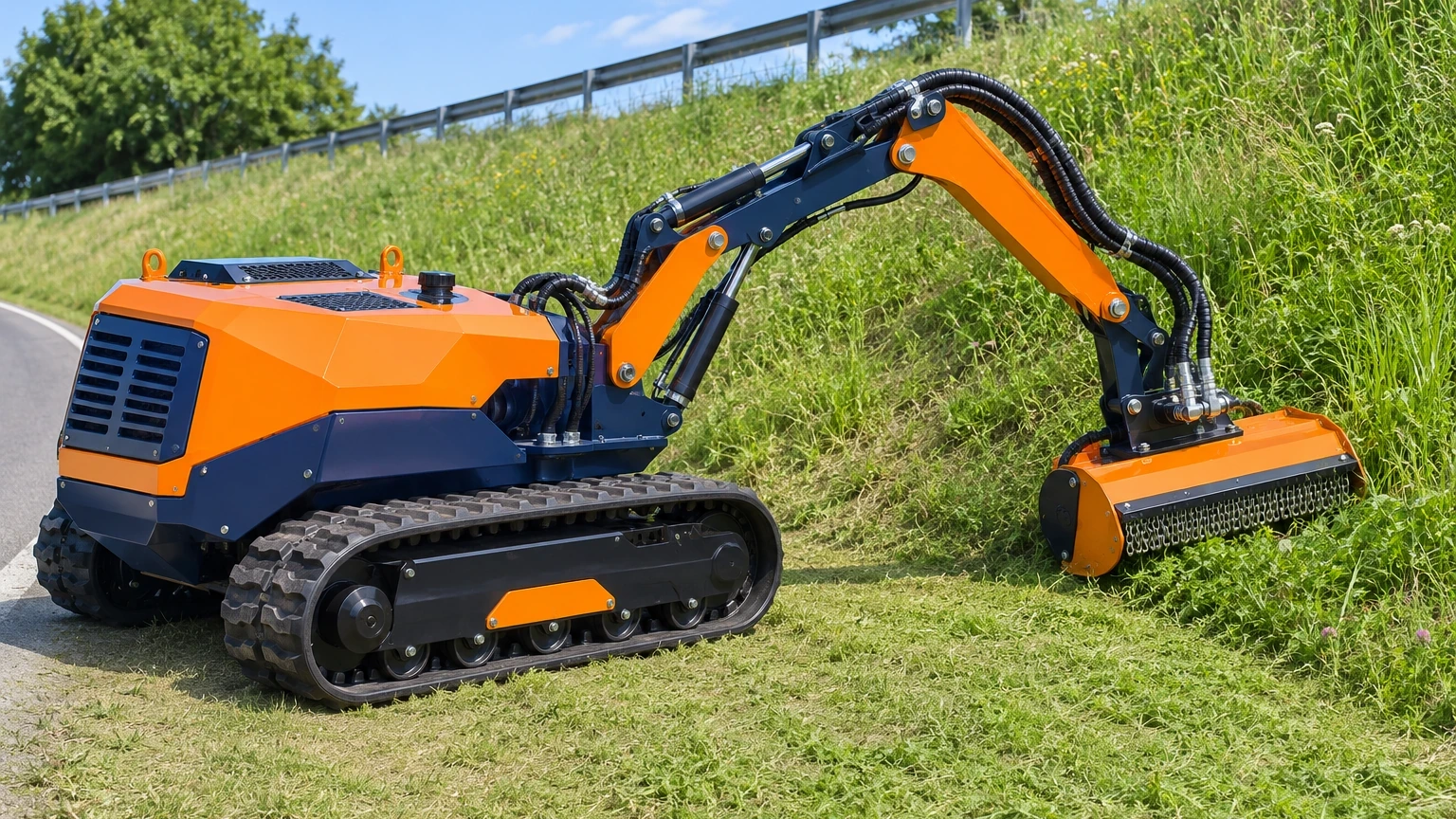
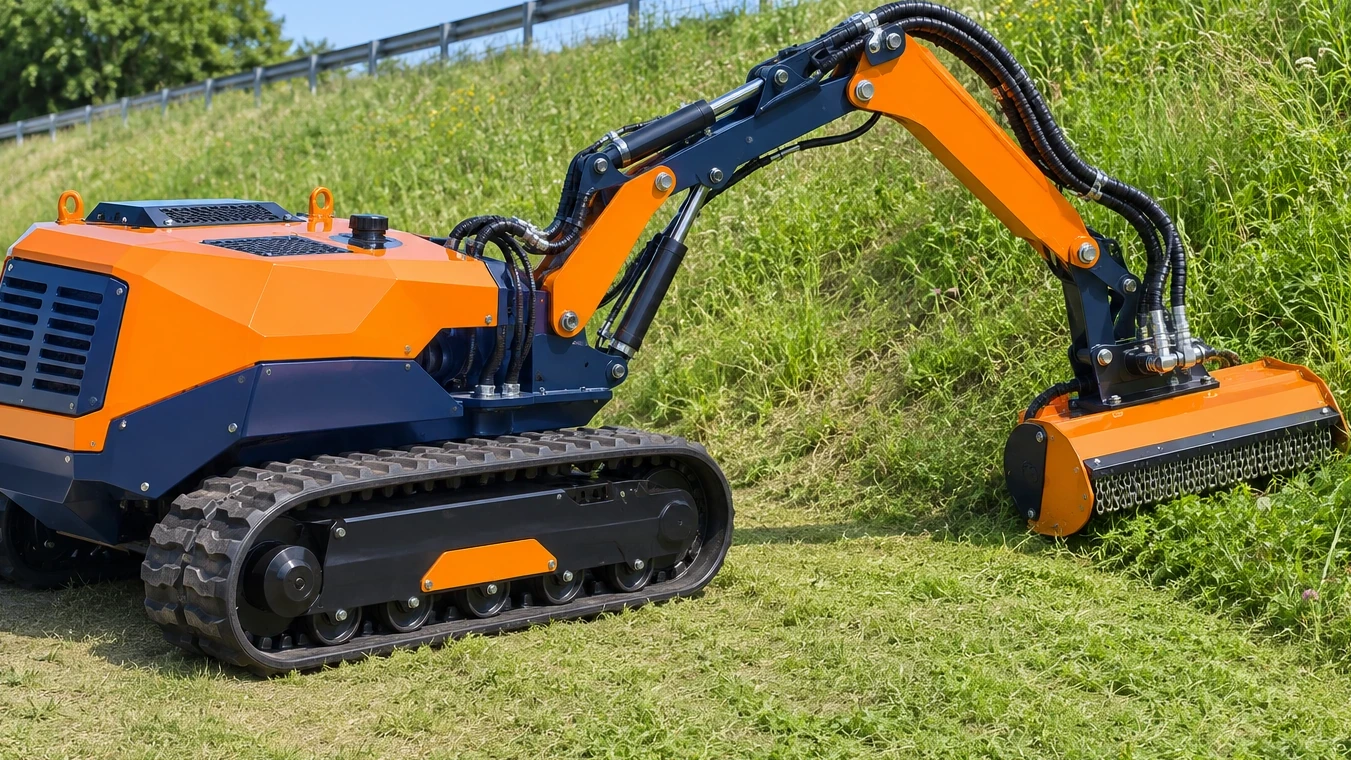
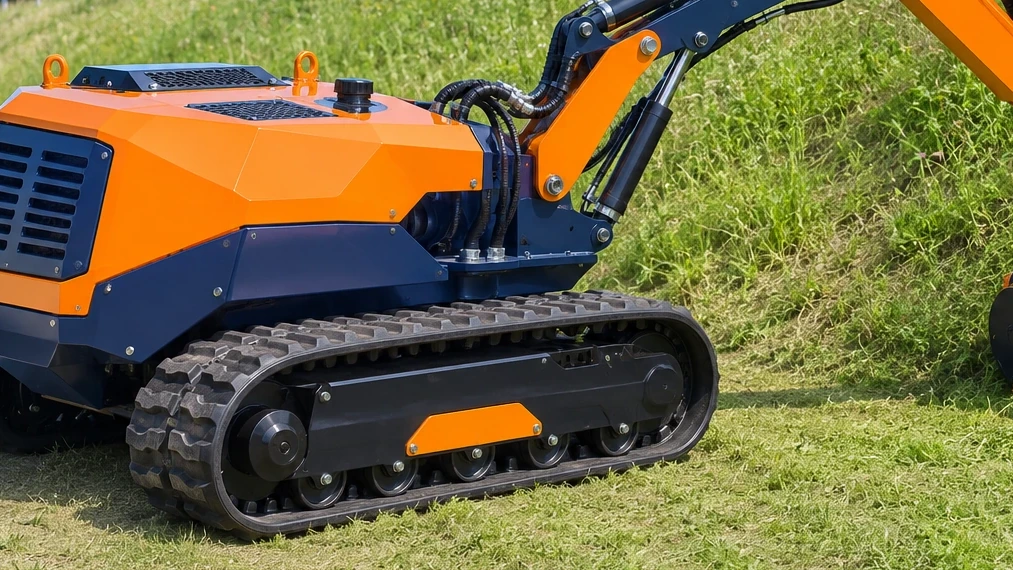
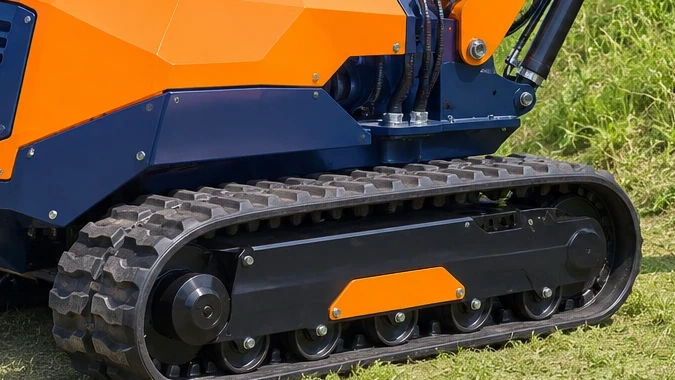
Remote Boom/Arm Vegetation Mower
SKU N21$10,494 per unit · FOB Qingdao
40% deposit, balance before shipment. Ocean freight, insurance, duty and destination charges excluded.
Volume discount
- Order over US$30,0003% offpay 97%
- Order over US$60,0005% offpay 95%
Discount eligibility depends on the products and order value. Final pricing is confirmed in your quotation.
- Working width / capacity
- 4200mm, 4800mm
- Warranty reference
- 1 year
Remote Boom/Arm Vegetation Mower (SKU N21) — remote and specialist mowers from LYVIK. Indicative unit price US$10,494, FOB Qingdao.
No online payment. Checkout creates a proforma-invoice order; we reply with bank details within one business day.
Overview
Remote Boom/Arm Vegetation Mower (SKU N21) belongs to our remote and specialist mowers range, supplied by LYVIK. Built for commercial grounds maintenance, landscaping crews and vegetation control on slopes, verges and open ground.
Price is US$10,494 per unit, FOB Qingdao. Orders are confirmed by proforma invoice: 40% deposit to start production, balance before shipment. Ocean freight, insurance, import duty and destination charges are excluded. Volume discount: 3% at US$30,000 and 5% at US$60,000 of eligible order value.
Reference values: working width / capacity: 4200mm, 4800mm; warranty reference: 1 year.
Reference details and specifications on this page describe the base configuration. Final mount, hydraulics, width, engine, packing and certification are confirmed on the order-specific specification sheet before the proforma invoice is issued.
Product details
Product details
- Carrier / interface
- skid steer quick attach
- Drive / hydraulics
- boom/flail
Reference basis. Final configuration is confirmed on the order-specific specification sheet.
Product specifications
Product specifications
| Working width / capacity | 4200mm, 4800mm |
|---|---|
| Warranty reference | 1 year |
Reference values for the base configuration. Mount, hydraulics, width, engine and packing are confirmed before the proforma invoice is issued.
Selection guide
Choosing, specifying and ordering Remote Boom/Arm Vegetation Mower
Plan the work and the order
Describe the vegetation work
Identify fence lines, banks, drainage areas or other locations only where they are part of the actual buyer brief, and describe how the site is accessed.
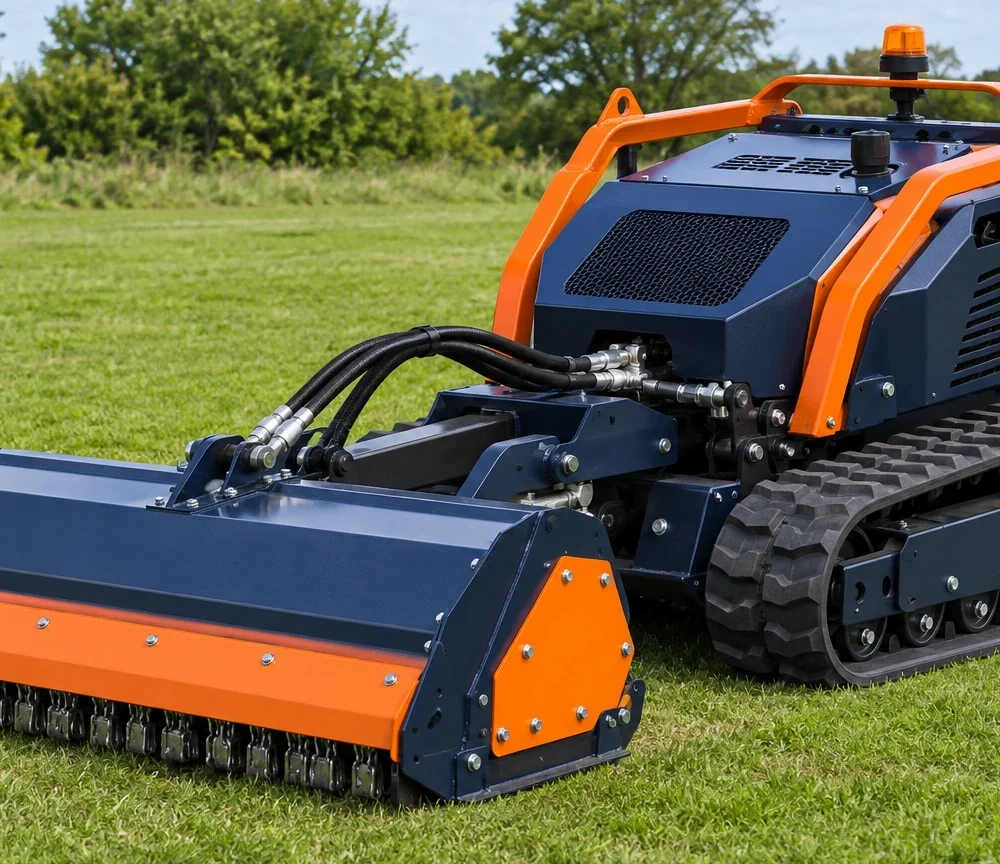
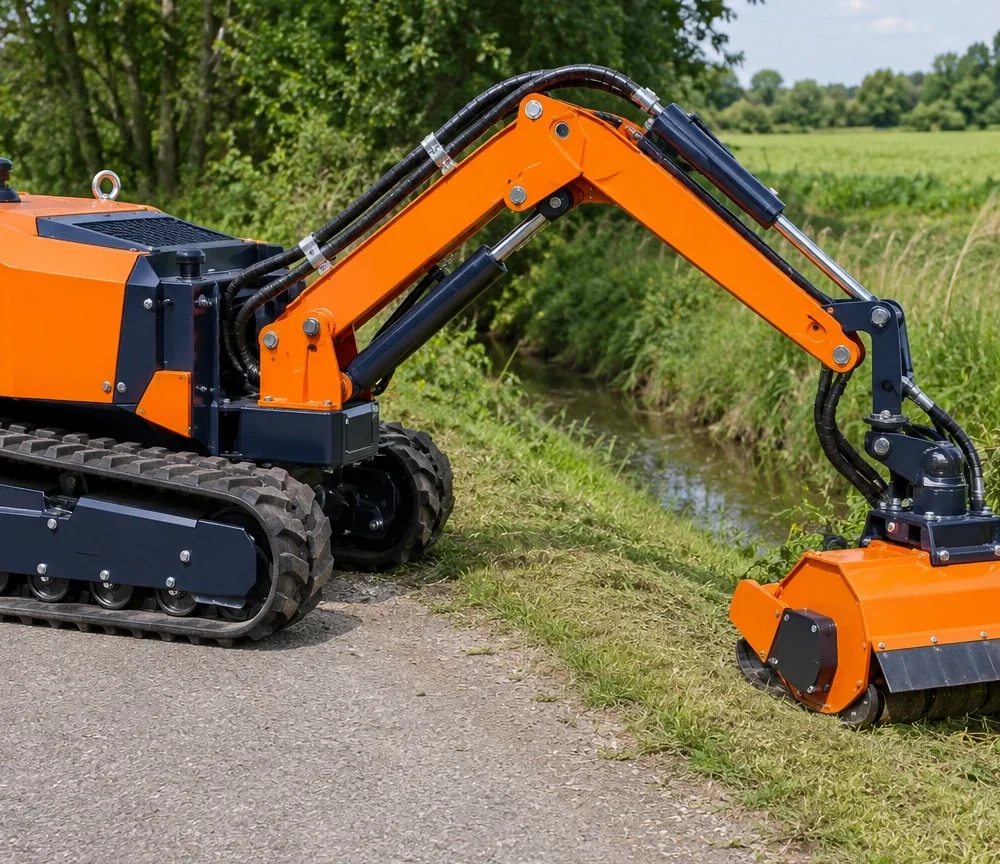
The listing describes N21 as a remote boom or arm vegetation mower. The planning name and scene image do not establish a delivered configuration.
Map the site and surroundings
Prepare a sketch of the route from unloading to the work area. Mark gates, turns, overhead obstructions, nearby property, roads and locations where other people or equipment may be present. Associate measurements and photographs with specific locations.
Record different site conditions separately. A response about one location should not be treated as confirmation for another; provide the same site brief to each supplier when requesting documentation.
Identify overhead and ground restrictions
Record known utilities, site restrictions, ground conditions and changes caused by weather. Follow the applicable local process and obtain qualified advice or authorizations where required for the actual work area.
This page cannot establish a safe working distance, approve a work plan or determine site suitability. The responsible team must use the equipment instructions and applicable local requirements.
Measure the route and working space
On the site sketch, label the approach route, each intended equipment position and the vegetation to be maintained from that position. Measure entrances, turns and overhead restrictions separately from the space needed around the proposed work. Include locations where equipment must be moved between sections.
Request the operating and transport dimensions of the complete offered configuration. Ask how the measurements change when an adjustable assembly is positioned for transport or work, if such an assembly is proposed. A base-unit dimension alone does not establish the footprint of the full package.
Request the actual working assembly
Ask the supplier to identify the exact proposed working assembly, mounting, controls and included equipment. Request the current specification and instructions with their model, revision and the conditions behind stated values.
The terms boom or arm are planning labels and do not establish a particular length, cutter, adjustment, hydraulic system or attachment. If alternatives are offered, request a separate itemised configuration and current documents for each.
Compare the documented working envelope
Give each supplier the same site sketch and measurements and ask for the applicable working-range diagram or equivalent documentation for the exact proposed configuration. Clarify the reference points, the included equipment and the conditions behind each stated reach or height.
If a proposed working position is outside the information supplied, identify it as an open question. Compare the documents with the responsible site team; do not transfer a competitor’s reach, infer a safe stand-off distance or treat a diagram as approval of a work plan.
Organise the work by equipment position
For a route with several separate work areas, give each intended equipment position an identifier and connect it to the vegetation, available ground and relevant obstructions shown on the site sketch. Record where the machine would need to move between positions and which areas have restricted access.
Ask the supplier which current diagram or operating information addresses each position for the exact offered configuration. If the documents omit a position or do not state the conditions behind a value, keep it as a question for the supplier and responsible site team. This comparison does not establish a safe working method.
Describe changes in vegetation and site conditions
Separate areas with different vegetation and describe the maintenance interval and known changes through the season. Note the conditions observed by the site team without assuming that the offered assembly can process a particular material or work on a particular surface.
Give each supplier the same descriptions and request the documented application limits for the proposed working assembly. Where an alternative is offered, keep its equipment identity and documents with the response.
Check the complete combination
Ask whether the proposal is a complete machine or uses a separate carrier and attachment. Where a carrier is involved, provide its exact make, model and configuration, and request written confirmation of mounting, controls and any power requirements.
Do not assume a tractor hitch, a particular connection or compatibility from the planning label. Ask which mounting pieces and controls are included, optional or pending in the written proposal.
Review controls and visibility
If remote operation is proposed, use the remote-control document checklist.
Identify the intended operator position and possible obstructions in the site sketch. Do not assume an unattended mode, a safe distance or a particular safety outcome.
Compare the supplied package
Request separate quotations for each proposed machine and working assembly. Identify the machine, mounting pieces, controls, connections, accessories and documents as included, optional or pending. Ask whether a change in working equipment affects the documented dimensions or instructions.
Retain the equipment identity and document revision with each offer. A picture or a feature described on another model is not evidence of N21 equipment.
Plan transport and receiving
Request transport dimensions, weight, packing and loading instructions for the exact proposed package. Identify parts that travel separately and compare the shipment with the buyer’s vehicle, receiving equipment and storage access.
Confirm packaging and unloading responsibilities in the written proposal.
Review upkeep and destination support
Ask for the operating and maintenance instructions, parts references and replacement-component information for the actual working assembly. Identify the required document language and who will receive and maintain the equipment.
Clarify whether training, warranty or service is offered and by whom. Do not assume components from another model are interchangeable.
Compare proposals and close questions
Send suppliers the same vegetation, site measurements, quantity, destination and desired schedule. Keep each exact configuration, working-range documents, price, production timing and transaction method with the corresponding quotation.
Before an order decision, identify unanswered site, configuration, control and support questions. The local page is a planning reference, not a confirmed quotation or a guarantee of reach or site suitability.
How to compare Boom mower options
Boom mower is best evaluated as a work package, not as a catalogue label. Define the material or vegetation, the working area, the access route and the result the site team expects. For Remote Boom/Arm Vegetation Mower (SKU N21), record the proposed machine, attachment interface, operating limits, transport dimensions and destination before comparing quotes. Model identity, configuration, lead time and availability are confirmed on the order-specific specification sheet. A useful Boom mower shortlist separates the task, site access, equipment package and commercial terms so each supplier answers the same question. The sections below show what to measure and what to request in writing, without treating a category name or an illustration as proof of suitability.
Define the work
Describe the material, vegetation or surface, the area covered and how often the Boom mower task repeats. Record the result expected after the pass.
Measure the site
Measure gates, aisles, overhead clearance, turning space, slopes and ground conditions. Add photographs and a route sketch, then have the site team confirm them.
Check the equipment package
Ask which machine, attachment and configuration are proposed. Confirm the interface, operating limits, documentation and transport dimensions for that exact package.
Compare the commercial offer
Put equipment, attachments, documentation, packing, freight, customs, price validity, lead time and support on one comparison sheet.
Site access, transport and setup
The access route is part of the Boom mower decision. Measure the narrowest gate, aisle or doorway, the overhead clearance, the turning space and the ground surface along the route. Record slopes, soft ground, kerbs, drainage and finished surfaces. If the route crosses a public area, occupied building or restricted site, add the working hours and permissions supplied by the responsible team.
The working area also needs a simple sketch. Mark where the material or vegetation is, where it must be placed, and where the operator can stand safely. For a machine, confirm the space needed to change attachments, refuel or recharge, clean down and store the unit between shifts. A route that works for an empty machine may fail once a trailer, attachment or load is added.
Before delivery, confirm the packed dimensions and weight, the unloading method and the receiving contact. Check that the destination can accept the transport vehicle and that the site can move the unit from the unloading point to the working area. Where these details are unknown, leave them blank in the enquiry rather than guessing.
Procurement and delivery planning
For B2B orders, LYVIK’s default position is production to order, with the customer arranging freight, customs clearance and import duties unless a written agreement says otherwise. The B2C market is planned for North America.
Keep the quotation comparable. Put the machine, attachments, documentation, packing, freight, customs, price validity, lead time and after-sales support on separate lines. Ask each supplier to identify the document revision and to mark any value that is an estimate. That makes it easier to see whether two proposals describe the same scope or only the same category.
Work planning and seasonality
Map the Boom mower work across the year rather than around a single busy week. Record peak periods, idle periods and the tasks that must be completed within a weather window. If the same unit will cover several seasons, list the attachments and changeover steps needed for each one. A proposal that looks efficient in one season may leave the crew short in another.
For each task, note the expected daily output, the number of operators and the support equipment needed. Include transport between sites, refuelling or charging, water or material supply, and cleanup. These inputs often determine whether a larger machine reduces total work or simply moves the bottleneck somewhere else.
Attachments, changeover and documentation
Ask how each attachment is mounted, what controls or hydraulic supply it needs, and how long a changeover takes with the crew available on site. Confirm that the attachment is documented for the proposed carrier. Do not assume that a shared mounting standard proves compatibility across models.
Request the operator manual, maintenance schedule, parts list and warranty statement for the exact configuration. Record who will receive the documents and who will train the operators. A complete handover package is part of the equipment offer, not an administrative extra.
How to prepare the enquiry
- Write the brief. Separate each task and site, and leave unknown values blank rather than guessing.
- Measure the route. Record the narrowest point and the space needed to work, turn and unload.
- List existing equipment. Note current machines, attachments, power sources and transport.
- Request documents. Ask for the model-specific specification, configuration list and manuals.
- Compare like with like. Use one sheet for equipment, attachments, freight and support.
- Confirm the destination. Confirm delivery point, unloading, duties, price validity and lead time.
Frequently asked questions
What should I compare when choosing Boom mower?
Compare the work package, access, proposed machine and configuration, documentation, transport and commercial terms. A model number alone does not establish suitability.
How much does a Boom mower cost?
This model is listed at US$10,494 per unit, FOB Qingdao. Configuration, attachments, packing, freight, destination and duties are confirmed line by line in a written quotation.
Can one machine cover several tasks?
Only if the attachment, interface and operating limits support each task. List the tasks separately and ask the supplier to confirm every combination.
What access information is needed?
Measure gates, aisles, overhead clearance, turning space, slopes and ground conditions. Confirm the route with the site team and note any restricted area.
What should the quotation include?
Ask for model and configuration, attachment list, manuals, packing, delivery point, freight basis, customs responsibility, price validity, lead time and warranty terms.
How should I compare two Boom mower quotations?
Use the same work brief, site measurements and configuration list for both. Compare the proposed equipment package, documentation, transport, price validity, lead time, duties and support line by line. Do not compare a bare machine price with a complete delivered package.
What if the site details are incomplete?
Leave unknown values blank and state that they still need confirmation. A supplier can respond with assumptions, but those assumptions should be written down and checked before an order. Do not treat an estimated dimension or capacity as verified.
Used in these industries
Related products
-
SKU M10
Remote Control Flail Mower
Grounds and landscape equipment, Weeding, trimming and cleanup machines
$6,996per unit · FOB Qingdao Add to cart -
SKU N31
Remote Tracked Sweeper
Grounds and landscape equipment, Weeding, trimming and cleanup machines
Price on requestquoted FOB Qingdao Read more -
SKU N29
Remote Drainage Ditch/Canal Bank Mower
Grounds and landscape equipment, Remote and specialist mowers
Price on requestquoted FOB Qingdao Read more -
SKU M09
60cm Electric Remote Control Lawn Mower
Grounds and landscape equipment, Remote and specialist mowers
$4,372per unit · FOB Qingdao Add to cart