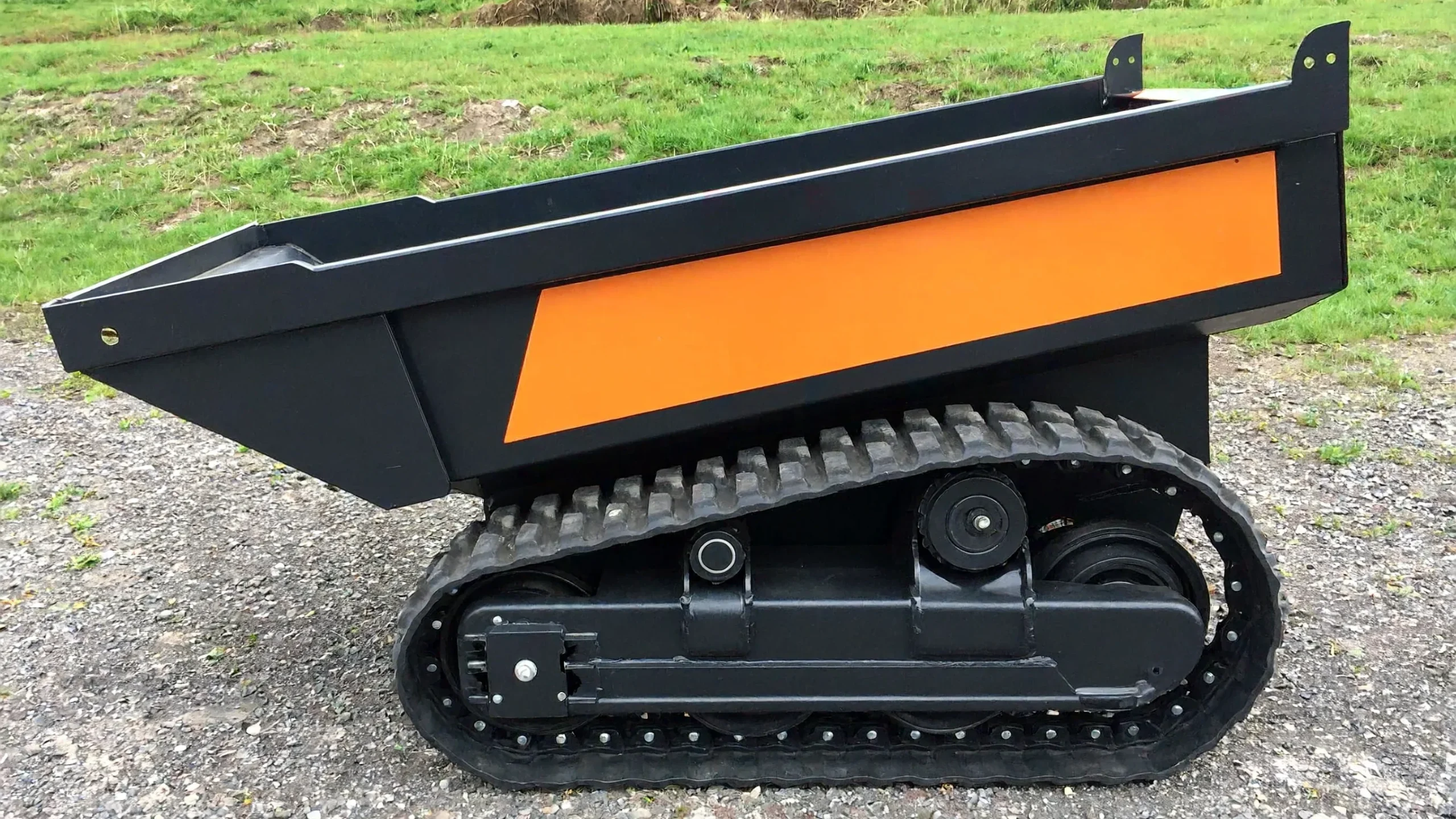
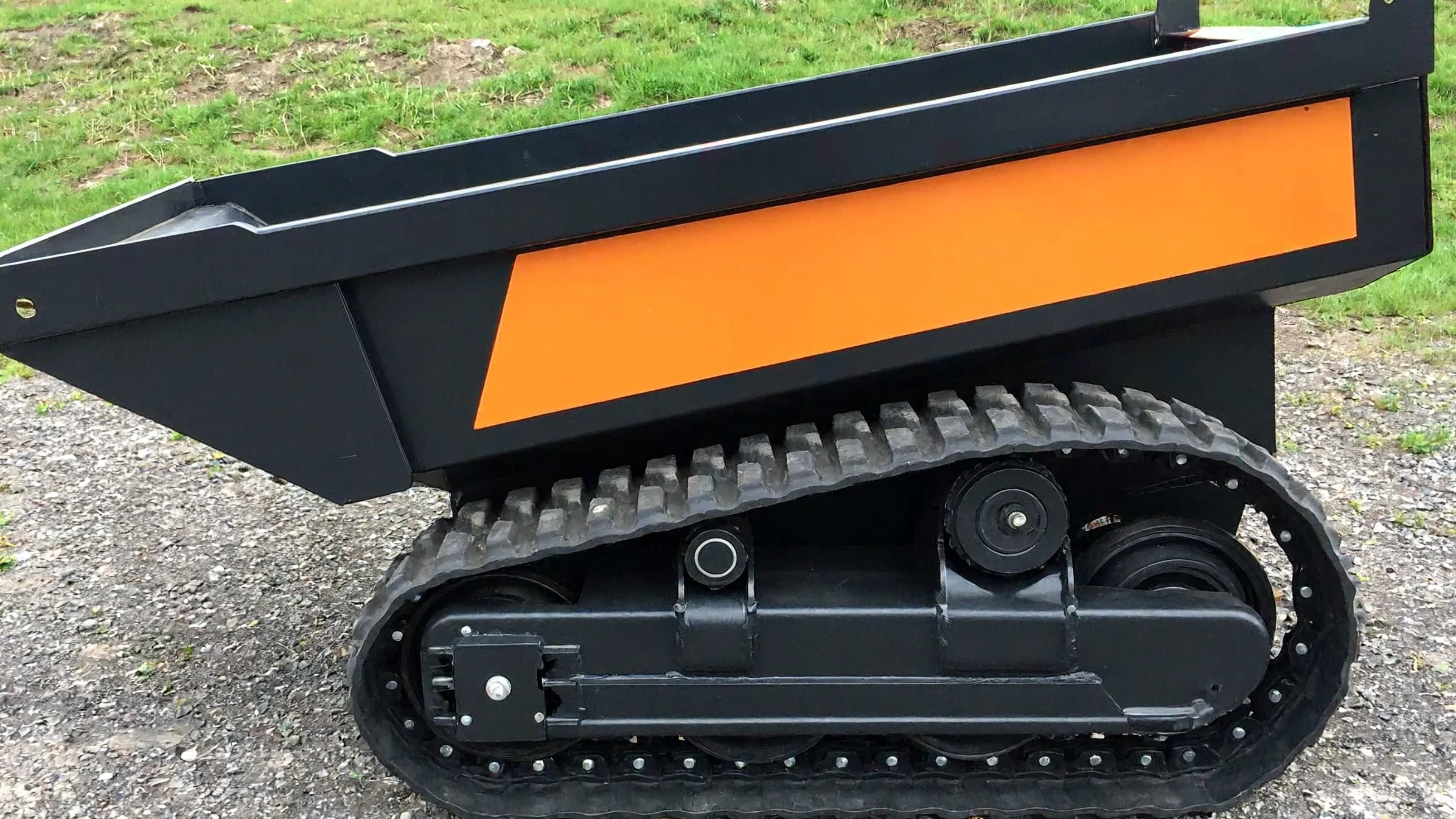
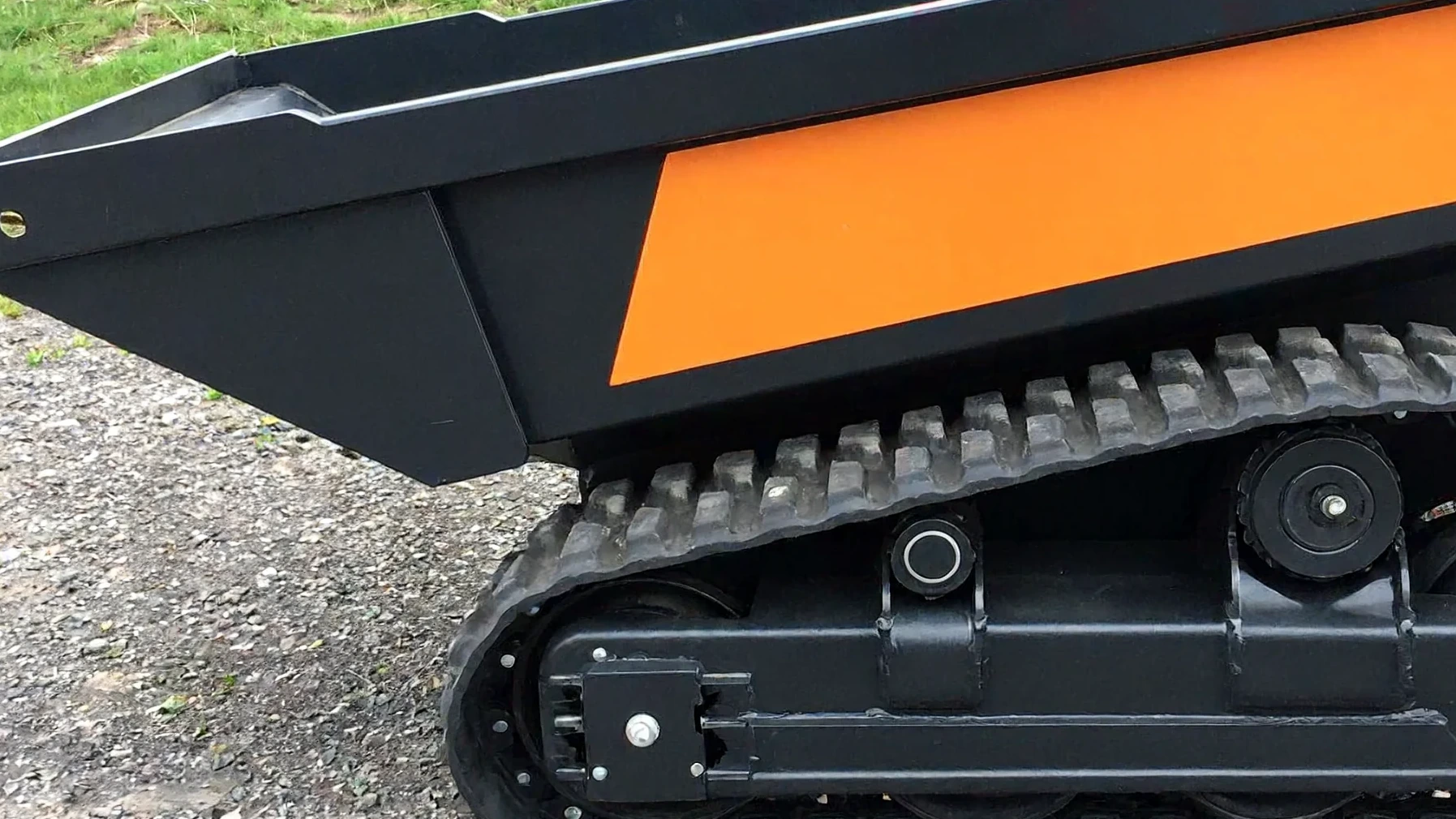
Remote Tracked Dumper
SKU M12$3,206 per unit · FOB Qingdao
40% deposit, balance before shipment. Ocean freight, insurance, duty and destination charges excluded.
Volume discount
- Order over US$30,0003% offpay 97%
The 5% tier is not available on this model.
- Power reference
- 5.5kW
- Working width / capacity
- 1 t, 0.5 m3, 25deg
- Dimensions (reference)
- 2476x850x1336mm
- Weight reference
- 960kg
Remote Tracked Dumper (SKU M12) — tracked carriers and material handlers from LYVIK. Indicative unit price US$3,206, FOB Qingdao.
No online payment. Checkout creates a proforma-invoice order; we reply with bank details within one business day.
Overview
Remote Tracked Dumper (SKU M12) belongs to our tracked carriers and material handlers range, supplied by LYVIK. Built for compact earthmoving, loading and material handling on sites where a full-size machine will not fit.
Price is US$3,206 per unit, FOB Qingdao. Orders are confirmed by proforma invoice: 40% deposit to start production, balance before shipment. Ocean freight, insurance, import duty and destination charges are excluded. Volume discount: 3% at US$30,000 of eligible order value (5% tier not available on this model).
Reference values: power reference: 5.5kW; working width / capacity: 1 t, 0.5 m3, 25deg; dimensions (reference): 2476x850x1336mm; weight reference: 960kg.
Reference details and specifications on this page describe the base configuration. Final mount, hydraulics, width, engine, packing and certification are confirmed on the order-specific specification sheet before the proforma invoice is issued.
Product details
Product details
- Carrier / interface
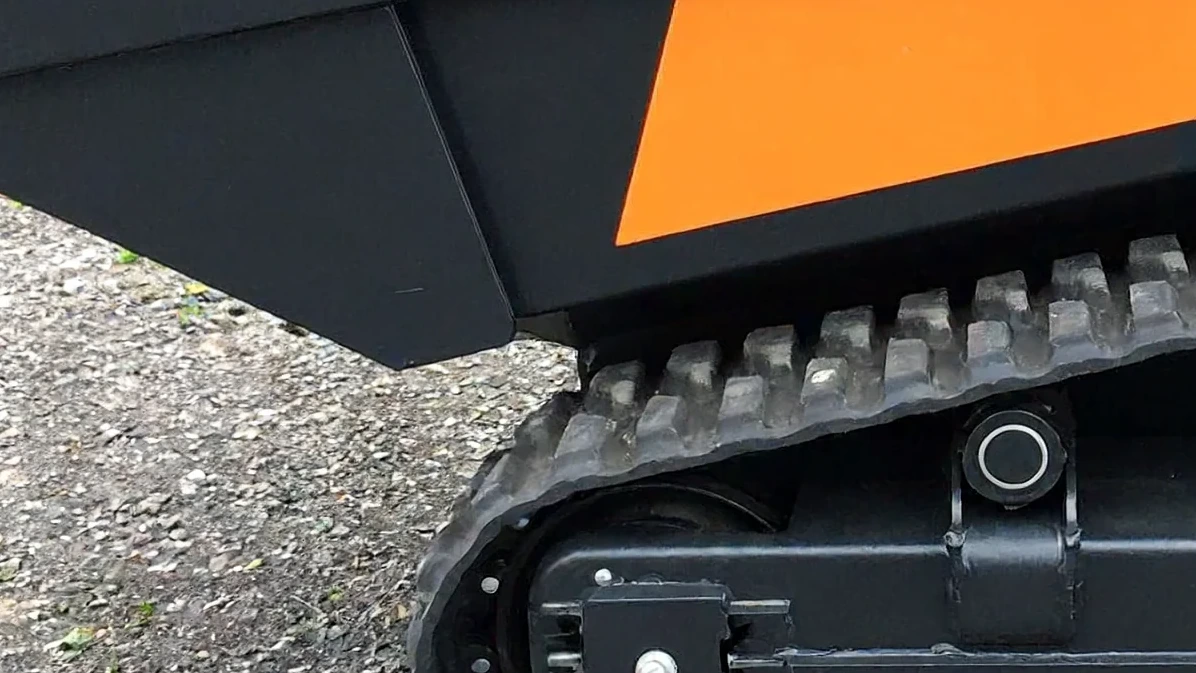
- self-propelled rubber track
- Drive / hydraulics
- 5.5kW AC motor, 48V 210AH lead-acid; hydraulic tipping
- Packing reference
- wooden case; gross 1020kg
Reference basis. Final configuration is confirmed on the order-specific specification sheet.
Product specifications
Product specifications
| Power reference | 5.5kW |
|---|---|
| Working width / capacity | 1 t, 0.5 m3, 25deg |
| Dimensions (reference) | 2476x850x1336mm |
| Weight reference | 960kg |
| Warranty reference | 1 year |
Reference values for the base configuration. Mount, hydraulics, width, engine and packing are confirmed before the proforma invoice is issued.
Selection guide
Choosing, specifying and ordering Remote Tracked Dumper
Plan the work and the order
Describe the movement of material
Note whether material is loose, bagged or otherwise contained, and identify the expected work schedule. These are inputs for a supplier discussion, not claims about the machine.
The listing describes M12 as a remote tracked dumper. The planning name or scene image does not establish a supported load.
Create a load record
Describe each material separately: whether it is loose or packaged, how the load is contained, its expected weight and any differences between deliveries. Give the supplier representative dimensions as well as weight where known. If the load changes with moisture or packing, explain the range observed rather than treating one sample as every future load.
Request the documented load information for the exact proposed machine and body, including the conditions behind the rating. A volume figure and a weight rating answer different questions; ask the supplier how both relate to the material brief.
Map the route end to end
Sketch the route from the loading point to the receiving area and back, including gates, turns, overhead restrictions and areas shared with other work. Label the narrowest points and record the available space to approach, load, unload and leave. Where several sites are involved, keep the route measurements separate.
Ask for the complete machine dimensions in the proposed operating arrangement and compare measurements taken at the same reference points. If a body or attachment changes the footprint, request the information for that combination. A photograph or an unloaded base-machine measurement cannot establish clearance for the full route.
Identify any different gates, surfaces or waiting areas used on the outward and return trips, and record when the loading and receiving points are expected to be ready. These are buyer planning inputs, not an M12 cycle-time claim.
Describe the ground conditions
Record the surfaces, slopes, drainage, seasonal changes and any areas affected by weather. If different segments of the route have different conditions, identify them separately on the site sketch and provide relevant measurements to the supplier.
Request the written operating limits and instructions for the exact machine and the conditions attached to them. The word tracked in the planning label does not establish the actual drive, traction or suitability for soft ground. The responsible operator must assess the site using the equipment instructions and applicable requirements.
Plan a construction-site material route
A site coordinator can describe the loading point, destination and return route for a representative movement of material. Mark where the route crosses other activity, changes surface or passes through a restricted opening. Identify whether the receiving point remains in one place or moves as the project progresses, and distinguish confirmed measurements from estimates.
If excavation equipment is part of the same procurement, N38 is a separate mini-excavator candidate. Ask for an individual proposal for the carrier and the excavator, and give the supplier the project brief for each. The presence of both references does not establish that they can be used together or that either is suitable for the site.
Coordinate farm collection and delivery
For a farm project, map how the buyer expects materials to move between the delivery point, storage and each field or orchard block. Identify seasonal access changes and the person who will receive each load. If supplies arrive in different forms, note where they are transferred between containers and who is responsible for that handover.
Ask for each separately requested machine and component to be quoted against that workflow. A tractor, loader, carrier or attachment is not included merely because it appears in an orchard or farm plan. The buyer should compare the written proposal with the site and the handling requirements for the actual materials. If handling aids are needed, record who provides them and request their specifications and prices separately; none is included by this preview.
Explore the farm material transport workflow
Prepare a landscape installation brief
A landscape contractor may need to bring material from a delivery area to several positions within a property and later return surplus material to a collection point. Mark the delivery area, route and each destination on a sketch. Show the available working space and any finished surfaces or features the property owner wants the project team to protect.
If loading or excavation equipment is also required, describe its task as a separate request and ask for its own documentation. The buyer’s work sequence can include multiple equipment lines, but a project shortlist is not a confirmation that any particular combination, attachment or handling method is supported.
Distinguish the load from the container
When the material is packed, provide the supplier with the outer dimensions, expected total weight and handling points of the complete packaged load. Explain whether the buyer expects to move the container intact or transfer its contents. A dimension of the empty body alone does not establish that a packaged item can be carried or unloaded as planned.
If containment equipment is required, request it as a separate item and ask who supplies it. The responsible project team must assess the actual load and method using the instructions and any applicable requirements. No particular container, restraint or load capacity is established by this planning page.
Separate a trip estimate from a machine rating
A buyer comparing work plans can record its own assumptions about the number of loading points, the route and the time available for the project. Keep those assumptions in the project brief and identify the person who will update them when the actual site plan changes. The same route information should be supplied when comparing quotations.
Do not present an internal schedule as a guaranteed cycle time or production rate for M12. Any supplier estimate should identify the exact equipment, material and conditions on which it is based. If an estimate is not available for the actual work, leave it open in the decision record.
Read load information together with its conditions
Tracked dumper listings do not always present one load figure for every operating condition. For example, Jansen USA presents different load figures by grade for some listed models. Those figures describe that supplier’s equipment and do not establish an M12 rating. Ask for the written values and operating conditions for the exact M12 configuration offered.
When comparing documents, note the machine and body to which each figure applies, the load description, the stated ground or grade condition and the units used. If one supplier reports a grade as a percentage and another uses an angle, do not compare the numbers as though they were the same unit. Ask the supplier to clarify the basis and applicable instructions; do not interpolate an operating limit from an unrelated listing.
Provide the buyer’s known route and load information separately from the supplier’s documented response. If the site conditions or the proposed configuration differ from the conditions attached to a published figure, record that gap and ask the responsible parties to review it. If documentation is unavailable, leave the rating and suitability open rather than substituting another model’s data.
Explain loading at the origin
Describe how material arrives at the loading point and what people or other equipment will be available there. Record the available approach space, the intended loading position and any restriction imposed by the property or site operator.
Ask the supplier for the applicable instructions and information needed to assess the proposed loading arrangement. This guide cannot establish a safe loading method.
Confirm the unloading arrangement
Describe the receiving point, where the material needs to go, the available space and any other equipment involved. Explain whether the buyer wants material removed by other equipment or asks the supplier to propose a discharge function; the request does not establish that such a function is supplied.
For each proposed arrangement, ask for the applicable equipment instructions, dimensions and information the site team needs to assess the receiving area. Keep components and prices with the correct quotation.
Review control information
If remote operation is proposed for the material-transport route, ask whether a controller is included and request its documented visibility, range, stop functions and lost-signal response. Use the remote-control document checklist to compare the instructions.
Show the intended operator location and possible obstructions on the site sketch. Do not assume an unattended mode, a particular stop behavior or a safe distance from the planning name. Training and demonstration availability are separate questions and remain pending.
Compare the package and documents
Request an itemised list of the machine, body, controls, accessories and documents, marking each as included, optional or pending. If a different body or control arrangement is offered, ask for its own specification and quotation.
Keep the document revision and configuration identification with each offer. A value, image or instruction from another model cannot establish the M12 configuration. Identify missing information before comparing prices.
Specify how the loading point is supplied
Explain whether material arrives in a delivery vehicle, is placed in a stockpile or is produced by another operation on the site. Identify who is responsible for the loading point, where the carrier would approach and where other equipment or workers may need access. The route sketch should include any waiting or staging space that the project team considers necessary.
If a proposed excavator, loader or other machine is to be requested, give its requirements separately and ask for the information needed to assess the whole operation. The supplier must identify the offered equipment; a photograph or candidate list does not prove that a particular loading arrangement is possible.
Make the receiving point measurable
Describe the location at which the load is expected to be delivered, the available approach and exit, and how the receiving team plans to take over the material. Where the intended destination changes during the project, note which locations have the most restricted access and who will verify those measurements.
If the buyer needs a particular discharge method, write that as a request and ask the supplier whether it is offered for the exact proposed body. Do not assume self-unloading, a tipping angle or a discharge height from a product category. Request the applicable dimensions and instructions for the actual proposal.
Account for different bodies in an offer
If suppliers propose alternative bodies or equipment packages, ask them to identify each configuration separately and specify what is included in its price. Request the dimensions and documents that apply to each offered combination, including any components that are supplied or shipped separately. Keep the alternatives tied to their respective quotation revisions.
For an item the buyer already owns, supply its manufacturer, model and interface information and request written confirmation before treating it as compatible. The listing does not establish an interchangeable body, tipping arrangement, hydraulic connection or mounting standard for M12.
Describe any preferred body material, side arrangement or access as a buyer requirement, then request the dimensions and instructions for the body actually offered.
Compare the complete cost of the working arrangement
Alongside the quoted equipment price, list the costs that the buyer expects to bear for the proposed job: shipping, customs clearance, import duties, receiving, preparation, routine upkeep and any separately priced support. Use the same assumptions for each offer, and mark amounts that are not yet known instead of treating them as zero.
Ask the supplier for maintenance instructions and any available information about consumables, replacement components and service for the exact proposed configuration. If an estimate depends on hours of use or local labour, state the buyer’s assumptions next to it.
Document the receiving handover
Before shipment, ask which items are expected in each package and which identification should be used to match the machine, body, controls and documents to the quotation. Agree who will receive the shipment and how any discrepancies will be reported to the supplier.
Request the applicable instructions and identify a contact for outstanding questions about assembly, loading or initial familiarisation. Do not assume that training, assembly assistance or local service is included.
Request package count, dimensions and weight when available and compare the information with the destination’s receiving and storage facilities. B2B buyers normally pay freight, arrange import clearance and pay duties unless otherwise agreed in the written offer; unloading, insurance and final delivery terms remain to be confirmed.
Review maintenance and support
Ask which operating and maintenance instructions, parts references and replacement components can be supplied for the exact machine and destination. Identify the document language and who will receive, operate and maintain the equipment.
Ask whether training, warranty or service is offered and by whom. Do not assume components are interchangeable with a different body or machine.
Compare offers against the same brief
Send each supplier the same load record, route sketch, site conditions, quantity, destination and intended schedule. Keep the exact configuration, current documents, price, production timing and transaction method with its corresponding quotation.
Before deciding, mark which load, route, unloading, control and support questions are answered and which remain open. The local page is a planning reference, not a confirmed quotation, load rating or guarantee of site suitability.
Build a fleet request by destination
A contractor or importer seeking several units can list the requested quantity, destination, proposed work and desired schedule for each site or customer group. Ask whether the offer describes the same configuration for every unit, and request separate identification for any proposed alternative. This makes differences in documents and included equipment visible.
If spare components, training material or a backup machine are requested, list them as separate lines and ask for individual prices and timing. None is implied by the main equipment reference. Destination serviceability, order method, production timing and availability remain subject to confirmation.
Plan product documents for a dealer or fleet
Identify who will receive the operator information, maintain the equipment and respond to questions after handover. Request the current documents for the actual proposed machine, the languages available and the method for identifying replacement parts. If the buyer plans to resell, describe the documentation needed for its intended market.
Ask the supplier to explain any proposed warranty, parts and service arrangements, including who is responsible at the destination. A requested service is not established as included simply because it appears in the enquiry. Keep all supplier commitments with the relevant equipment and commercial proposal.
Keep proposal changes traceable
When an equipment configuration changes during quotation, record the new revision and the reason for the change. Compare the updated machine, body, controls and included components against the original request, and ask which earlier documents or prices are no longer applicable. A change in one component can change the information the buyer needs to evaluate.
Keep buyer estimates, supplier statements and outstanding questions distinct. The project team can use that record to compare offers on a consistent basis without filling gaps with competitor values. Price, specifications, availability, route suitability and transaction method remain pending until confirmed for the exact order.
Before requesting a Mini dumper quotation
Mini dumper selection should start with the work, access and proposed configuration. Record the material or vegetation, the working area, the route and the expected result before comparing Remote Tracked Dumper. Ask for the model-specific specification, attachment list, transport dimensions, price validity, lead time and destination terms in writing. A category name, illustration or number in the listing name does not confirm suitability.
Used in these industries
Related products
-
SKU N36
Tracked Stone Crusher
Earthmoving and material handling, Stone crushing equipment
$34,768per unit · FOB Qingdao Add to cart -
SKU N37
Wheel Log Grapple Loader
Earthmoving and material handling, Tracked carriers and material handlers
$25,440per unit · FOB Qingdao Add to cart -
SKU M14
Remote Chain Trencher
Earthmoving and material handling, Trenching, drilling and plowing equipment
$6,996per unit · FOB Qingdao Add to cart -
SKU N40
2.5 Ton Mini Excavator
Earthmoving and material handling, Mini excavators
$12,402per unit · FOB Qingdao Add to cart