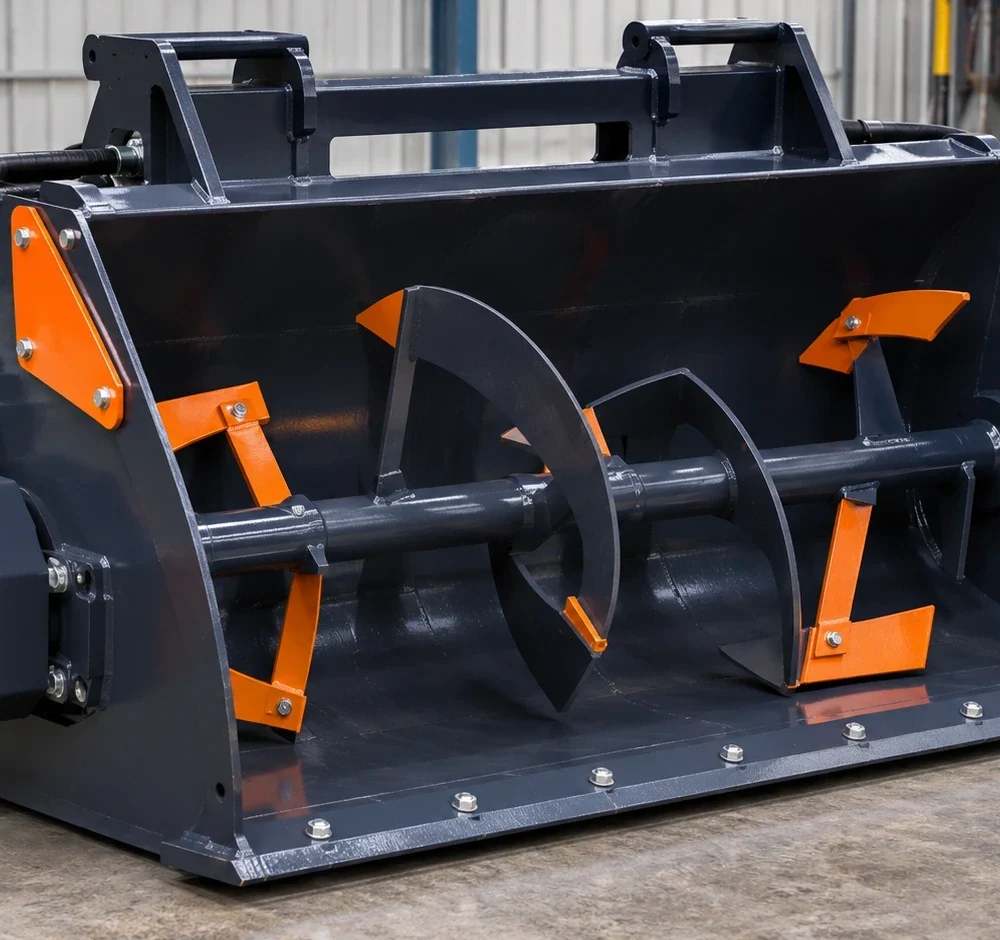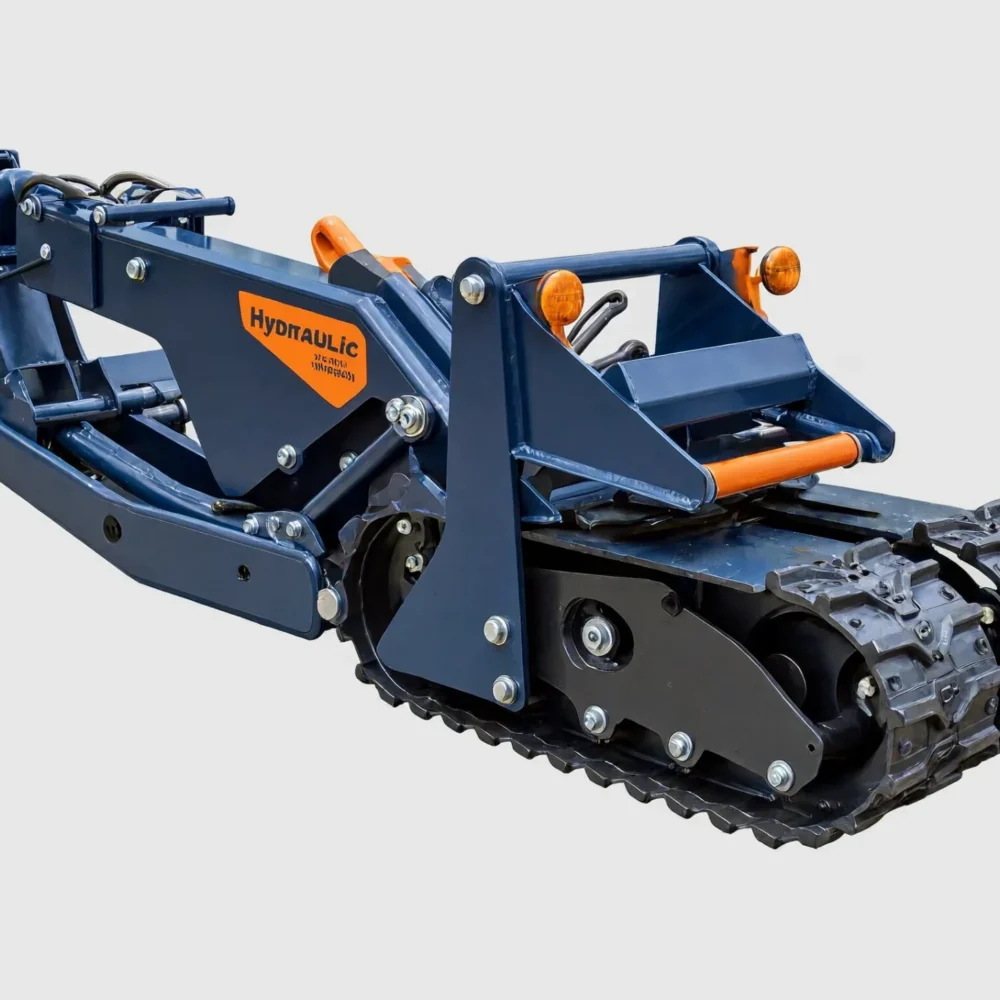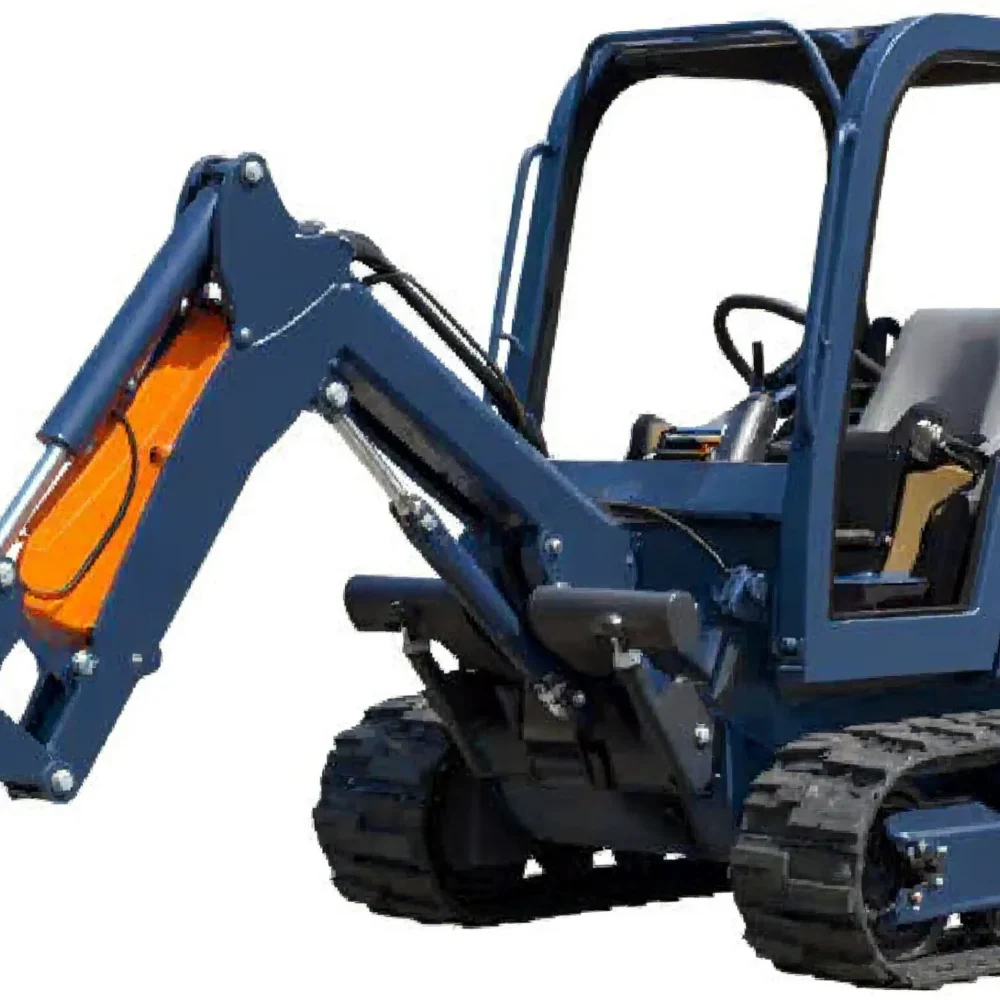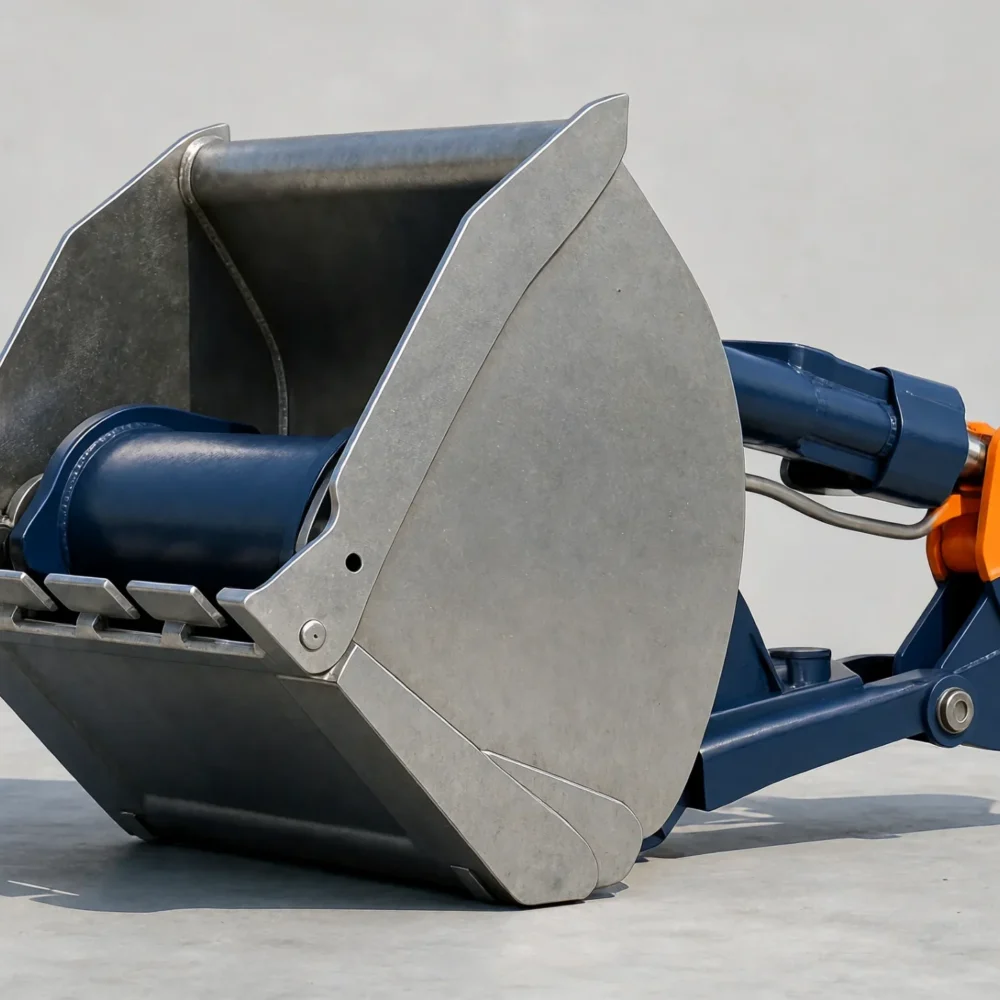
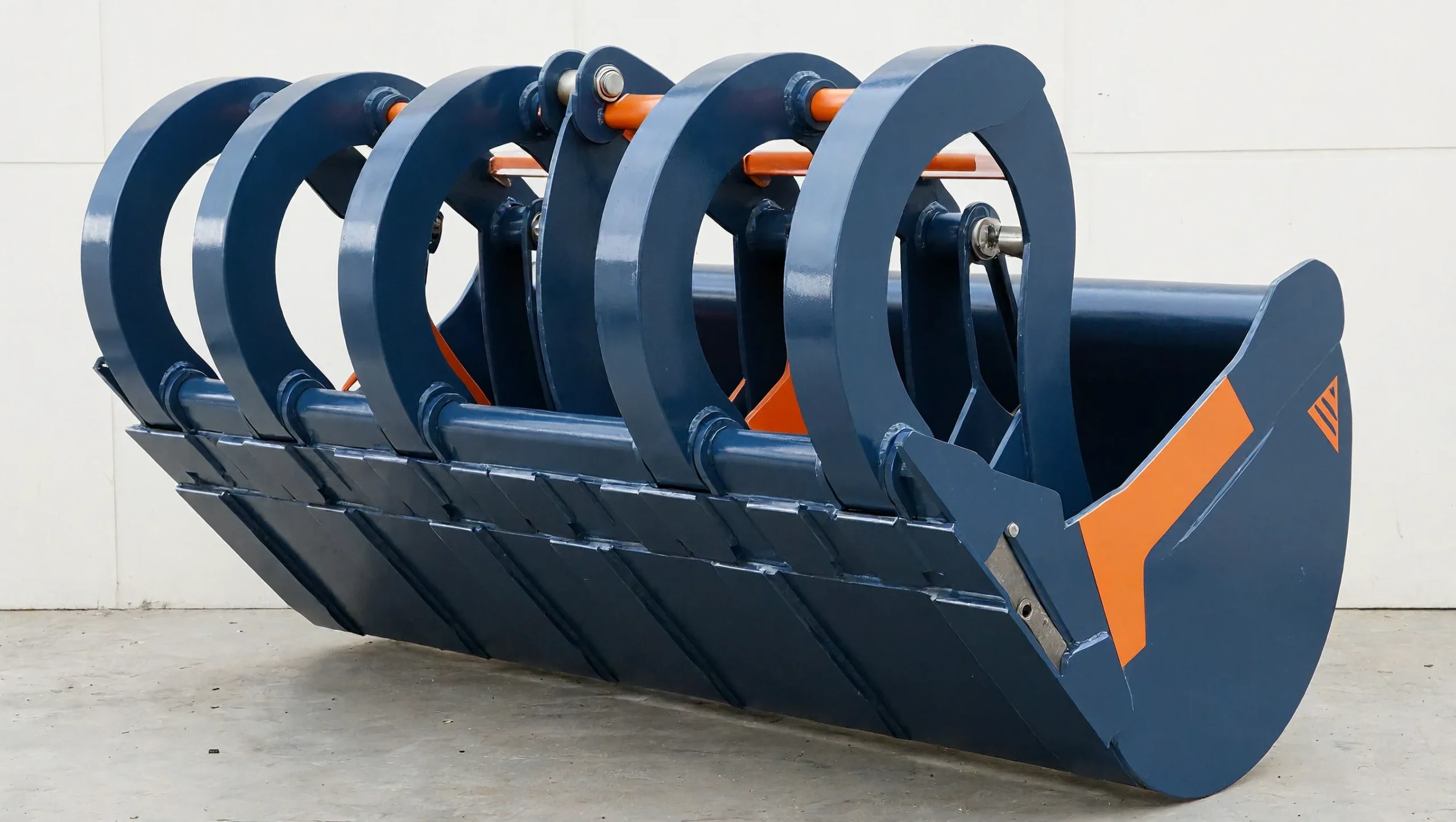
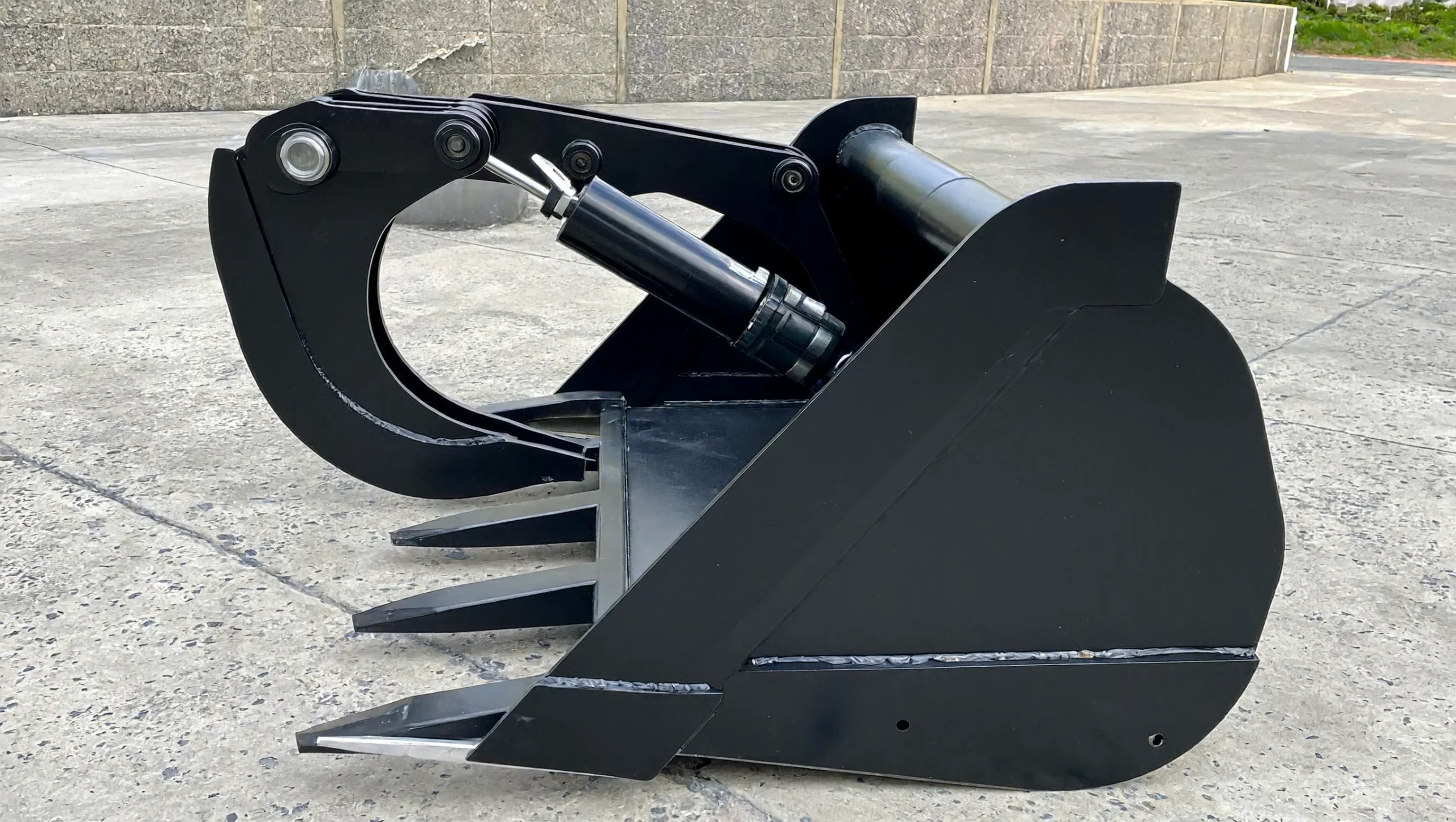
Grapple bucket
SKU AT04$1,336 per unit · FOB Qingdao
40% deposit, balance before shipment. Ocean freight, insurance, duty and destination charges excluded.
Volume discount
- Order over US$30,0003% offpay 97%
- Order over US$60,0005% offpay 95%
Discount eligibility depends on the products and order value. Final pricing is confirmed in your quotation.
- Working width / capacity
- 1850mm, 40/60/72/84in
- Weight reference
- 450kg
- Warranty reference
- 1 year
Grapple bucket (SKU AT04) — buckets, forks and lifting from LYVIK. Indicative unit price US$1,336, FOB Qingdao.
No online payment. Checkout creates a proforma-invoice order; we reply with bank details within one business day.
Overview
Grapple bucket (SKU AT04) belongs to our buckets, forks and lifting range, supplied by LYVIK. A carrier-mounted implement that extends the work a skid steer or excavator can do without a second machine.
Price is US$1,336 per unit, FOB Qingdao. Orders are confirmed by proforma invoice: 40% deposit to start production, balance before shipment. Ocean freight, insurance, import duty and destination charges are excluded. Volume discount: 3% at US$30,000 and 5% at US$60,000 of eligible order value.
Reference values: working width / capacity: 1850mm, 40/60/72/84in; weight reference: 450kg; warranty reference: 1 year.
Reference details and specifications on this page describe the base configuration. Final mount, hydraulics, width, engine, packing and certification are confirmed on the order-specific specification sheet before the proforma invoice is issued.
Product details
Product details
- Carrier / interface
- skid steer quick attach
- Drive / hydraulics
- dual cylinder
- Packing reference
- iron frame
Reference basis. Final configuration is confirmed on the order-specific specification sheet.
Product specifications
Product specifications
| Working width / capacity | 1850mm, 40/60/72/84in |
|---|---|
| Weight reference | 450kg |
| Warranty reference | 1 year |
Reference values for the base configuration. Mount, hydraulics, width, engine and packing are confirmed before the proforma invoice is issued.
Selection guide
Choosing, specifying and ordering Grapple bucket
Plan the work and the order
Describe the material handling work
Identify loads that differ in shape or require a separate handling arrangement.
AT04 is a grapple bucket planning reference.
Describe the shape and known weight of individual items separately from loose or mixed material. Identify pickup and placement points, and whether the work involves repeated loads or a changing mix. These are buyer inputs for evaluating the offered combination.
Clarify the gripping arrangement
Ask the supplier to identify the working components actually offered and provide the dimensions and documented limits relevant to the material brief. If alternatives are proposed, request separate equipment lists and ask how their dimensions and carrier requirements differ.
Do not assume the number of gripping components, a particular control arrangement or compatibility with existing attachments. Keep the supplier’s response, the proposed carrier identification and the relevant document revision together when comparing offers.
Map the complete route
Record gates, turns, overhead limits and the space available at both ends of the route. Include the carrier’s travel path and the place where the attachment will be stored or received.
Request the documented dimensions and relevant working information for the exact carrier and attachment combination. Ask how the equipment and any load are represented in each stated measurement.
Confirm the proposed combination
Provide the carrier make, model and configuration and ask the supplier to identify the attachment’s mounting, control and any power requirements. Request written compatibility confirmation for the exact combination.
Ask which mounting components, controls and connections are included or separately supplied. Do not infer the jaw arrangement, hydraulic interface or attachment fit from another listing.
Open the attachment compatibility checklist
Read load information in context
Provide the load brief and ask for the applicable capacity information, stated conditions and instructions for the offered combination. Clarify the configuration, load position and other conditions to which each figure refers.
Keep the supplier’s source and revision with the quotation. A headline figure for a different carrier, attachment or load position does not establish the limits of this combination.
Request instructions and parts information
Ask for current operating and maintenance instructions, inspection information and a way to identify parts for the exact attachment. The responsible team must assess the actual task and local requirements.
Confirm whether the required documentation, warranty, replacement components and destination service can be offered.
Compare grapple proposals
For each grapple proposal, record the material and load description, the actual working assembly, any offered controls and hydraulic connections, and the mounting items. Ask the supplier to identify separately priced hoses or adapters and confirm the exact carrier combination in writing. Compare quantities, production timing and destination support against the same brief without assuming a gripping force or load rating.
Match the grapple enquiry to the work
Different material streams and handling routes call for different information. These examples help a buyer describe a project; they do not establish AT04 specifications or compatibility.
Landscaping and site cleanup
List the types of brush, branches or other loose material, their approximate sizes and the expected collection points. Explain whether the job involves sorting, loading a container or moving material between piles. Ask each supplier which proposed components address that work and what information is still needed before an offer can be finalized.
Yard and depot handling
Describe the individual objects and mixed loads handled at the depot, together with the destination of each load. If pallets are also part of the work, include pallet forks as a separate candidate rather than assuming one attachment handles every task. Ask for separate prices and identify who supplies the carrier and mounting equipment.
One site or several destinations
Provide the number of machines and attachments needed for each destination, the required documents and any timing constraints. Ask for production timing, packaging and parts support separately. For B2B orders, the buyer normally pays freight, arranges import clearance and pays duties unless otherwise agreed in the written offer.
Describe what needs to be held
A grapple request begins with the material, not an assumed attachment shape. Tell the supplier what must be retained and what can pass through or fall away.
Mixed brush and branches
Branches, leaves and mixed brush.
What to include in your enquiry
Describe the range of branch sizes, the amount of loose leaves or soil mixed in, and whether the load needs to be sorted before it is placed. Ask the supplier how the proposed lower structure and gripping arrangement address that mix. Photos of a typical pile and the receiving container give more context than a single material name.
Logs and irregular pieces
Individual pieces with known size and weight.
What to include in your enquiry
Give the approximate dimensions and known weight of typical and largest pieces, noting how consistently they are shaped. Explain where the pieces begin and where they need to go. Ask which documented information applies to the actual load, carrier and attachment configuration; do not treat another machine’s rating as approval.
Rubble, offcuts or debris
Mixed fragments, offcuts and debris.
What to include in your enquiry
Describe the range of piece sizes, whether small fragments should be retained and whether sorting is required. Provide representative photographs and tell the supplier about any material restrictions at the destination. Ask for a drawing of the proposed working structure so the response can be compared against the material description.
Read the dimensions before comparing offers
A grapple bucket has several dimensions that answer different questions. Give the supplier the site and material measurements you have, then request the corresponding values and measurement points for its exact proposal.
Three measurements to keep separate
- Attachment width:. consider the complete outside width and how it is measured.
- Jaw opening:. request the stated opening and measurement points for the proposed arrangement.
- Shipping envelope:. ask for packed dimensions independently of working dimensions.
Ask for the same units and reference points across offers; conversion of units alone does not make differently defined measurements equivalent.
Open the dimension and configuration checklist
Record the full width stated in the supplier drawing and ask whether any mounting or hydraulic components extend beyond it. Compare the documented envelope with measured access points and any site restrictions. A nominal size in a product name is not necessarily the widest point of the complete proposed arrangement. Provide a typical and a largest object size with the orientation in which each would be presented. Request the opening dimension, the points between which it is measured, and the drawing or instructions for the offered configuration. An opening figure alone does not determine whether a particular load can be handled. Ask how the supplier measures height with the jaw closed and the overall length of the attachment. These figures can help receiving teams plan storage space, but the complete carrier and attachment envelope requires separate documentation. Clarify whether the supplier describes the attachment alone or a mounted assembly. Request the weight of the offered attachment and identify which components are included in that value. Ask separately for the gross packed weight and number of packages. Provide any receiving or unloading constraints to the supplier rather than assuming a weight from a similar product applies. Ask the supplier to identify the offered lower working edge or contact parts, their configuration and the method used to identify replacement items. If alternatives are offered, request separate descriptions and prices. A replaceable edge, particular material grade or wear life is not established for AT04. Where the proposed grapple uses hydraulics, request its documented requirements and the list of included hoses and connection components. Supply the carrier manufacturer’s circuit information for the supplier’s review. The responsible supplier must assess the actual combination; a single matching number does not confirm compatibility.
For an example of how manufacturers label dimensions, see the Caterpillar utility grapple specification. Its values and configuration are for that manufacturer’s product and do not describe AT04.
Why the full attachment identity matters
Two listings can use the same nominal width while describing different configurations. The following figures come from two identified Bobcat listings and are shown only to explain how to read an offer. They are not AT04 specifications, prices or compatibility claims.
Read purchasing note
Keep the full model or part identifier with every dimension. The published figures above show why a width label alone cannot identify the complete configuration. Ask the supplier for a current drawing that defines measurement points and units for its actual offer. Do not treat open height as a jaw-opening dimension unless the supplier defines it that way.
Read purchasing note
The example rows are manufacturer-labelled operating weights. They are not packed shipment weights and cannot be used for AT04. Ask the proposed supplier what is included in its attachment weight, then request package count and gross weight separately for the destination and receiving plan.
Read purchasing note
The Bobcat part listing identifies a carrier-side relief valve as a separate required component for that particular product. This illustrates why an offer should identify carrier requirements and separately supplied parts; it does not establish that AT04 has the same requirement. Give the supplier the exact carrier documentation and ask it to identify what the proposed combination needs.
Read purchasing note
For each alternative, retain the supplier’s date, product identity, drawing revision, included components and stated conditions. Ask for a separate response if the carrier or attachment changes. If a measurement, mounting part or hydraulic requirement is missing, record it as an open question instead of borrowing a value from another listing.
Request the current documentation and an itemised quotation for the exact proposed equipment.
Separate irregular items, loose material and pallets
A single job can involve several different loads. Describe each task separately and request only the attachments the buyer wants to evaluate.
View task brief
For brush, branches or other irregular items, identify the typical and largest pieces, their known weight and the way they are presented for pickup. Explain whether the material arrives mixed with soil or small fragments, whether sorting is required and where the material will be placed. Ask the supplier to identify the proposed gripping and lower working components, documented dimensions and included connections. A grapple bucket is a planning category; AT04’s actual arrangement and its suitability for a given material remain to be confirmed.
View task brief
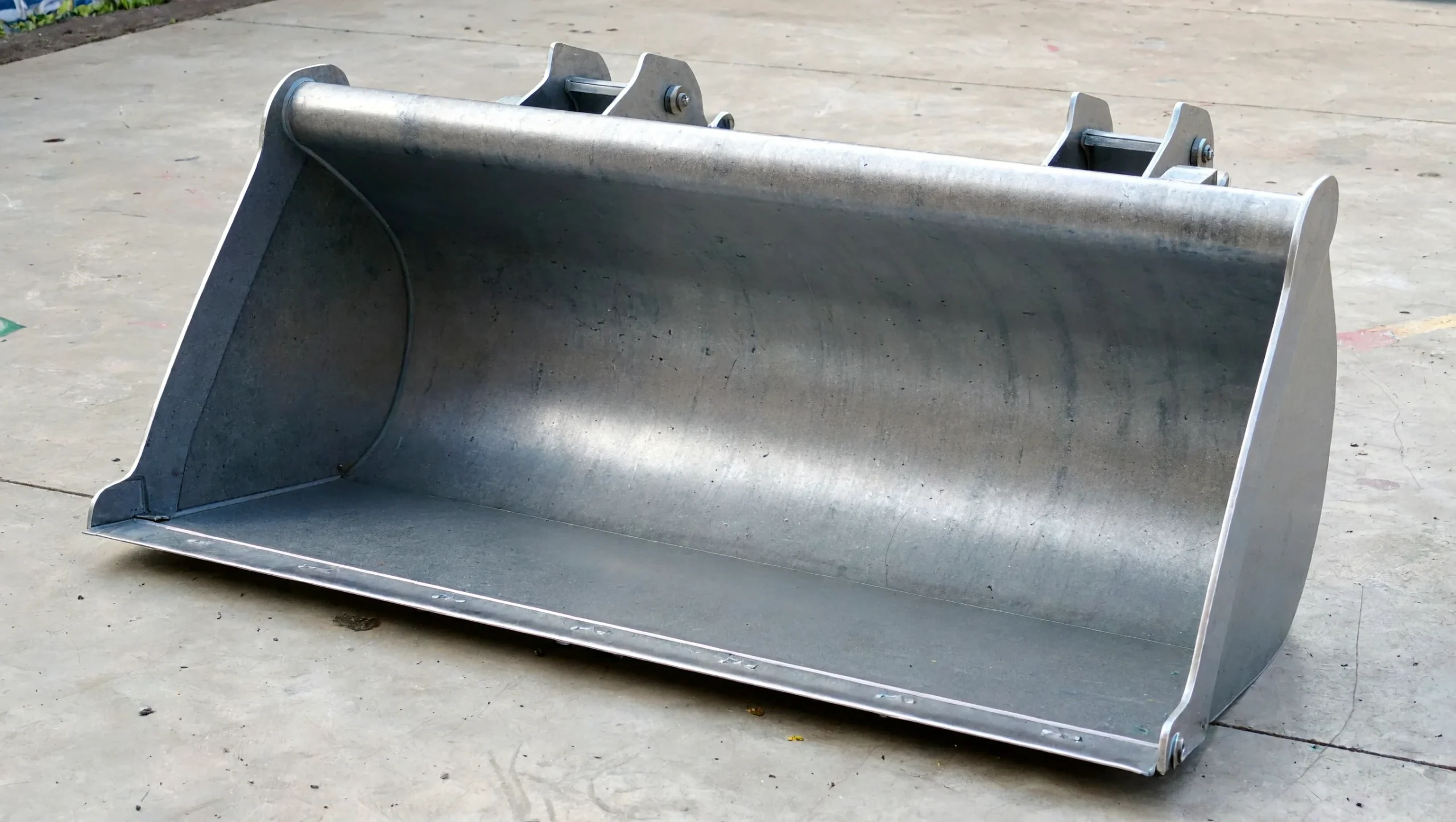
For a separate loose-material task, describe the material, pickup and receiving points, known quantities and the working surface. Record whether the buyer needs to move material between piles, fill a container or request a different operation. Site and material information helps the supplier describe its proposed scope. Ask which bucket type and mounting pieces are offered, their documented dimensions and conditions, and whether a price covers the complete requested assembly. AT01 is a separate reference; its shape, volume, carrier compatibility and availability are not established by the photograph.
View task brief
For pallets or supported containers, give the known complete load weight, dimensions, support openings and the intended pickup and placement locations. Identify packaging or overhang where relevant and distinguish measured values from estimates. If loads vary, list the different types rather than using one average. Request the offered frame and forks, applicable documentation and the mounting scope for the exact carrier. AT05 is an independent candidate; the name does not establish fork dimensions, a load rating or compatibility with the carrier or with AT04.
For a manufacturer’s general distinction between grapple, bucket and fork work, see Bobcat’s attachment selection guide. Its equipment and examples do not establish the configuration or performance of the LYVIK candidates.
Request one project, with separate scopes
A landscaping contractor may need to collect irregular cuttings, receive palletised supplies and move a separate loose material. A yard may encounter a different sequence: an incoming pallet, a mixed pile and a later collection point. In either case, identify which tasks are actually required and the equipment already owned; the three candidates are options for discussion, not a required bundle.
For every selected line, request the offered model or revision, included parts, price, production timing and the information needed for the destination. If the buyer wants several attachments for one carrier, give the carrier identity once and ask for a separate mounting and compatibility response for each proposed combination. If different carriers are used at different sites, identify each one independently.
Keep the buyer’s load measurements with the corresponding task and retain the supplier’s drawings and conditions with each offer. A response for a pallet is not automatically applicable to a loose-material task, and a response for one carrier does not establish fit with another. Missing details remain open until the responsible parties review the actual proposal.
Compare two itemised project offers
Use the same carrier identity, load descriptions, quantities and destination for both requests. The columns below are placeholders for buyer review; they are not supplier quotations or editable fields. Keep the source and date for every answer. If one proposal includes a carrier and another covers the attachment alone, separate those lines before comparing the requested scope. List any mounting or connection item as included, separately priced or unanswered. Do the same for a bucket or forks if either is requested alongside the grapple. Record the stated dispatch point, packing information and named delivery terms with each offer. B2B buyers normally pay freight, arrange import clearance and pay duties unless otherwise agreed in writing. A complete comparison includes the buyer’s applicable logistics costs, but the local preview does not calculate them. If the carrier, load or destination changes, ask which technical and commercial answers need revision. Keep the revised response with the correct equipment identity and document revision; neither column establishes a confirmed configuration, capacity or price.
Used in these industries
Related products
-
SKU NEW-MIX
Skid Steer Concrete Mixer Attachment
Attachments and implements, Concrete attachments
$1,458per unit · FOB Qingdao Add to cart -
SKU AT03
Hydraulic trencher attachment
Attachments and implements, Digging and ground preparation
Price on requestquoted FOB Qingdao Read more -
SKU AT02
Hydraulic auger
Attachments and implements, Digging and ground preparation
$1,866per unit · FOB Qingdao Add to cart -
SKU AT06
Hydraulic breaker
Attachments and implements, Digging and ground preparation
$1,431per unit · FOB Qingdao Add to cart